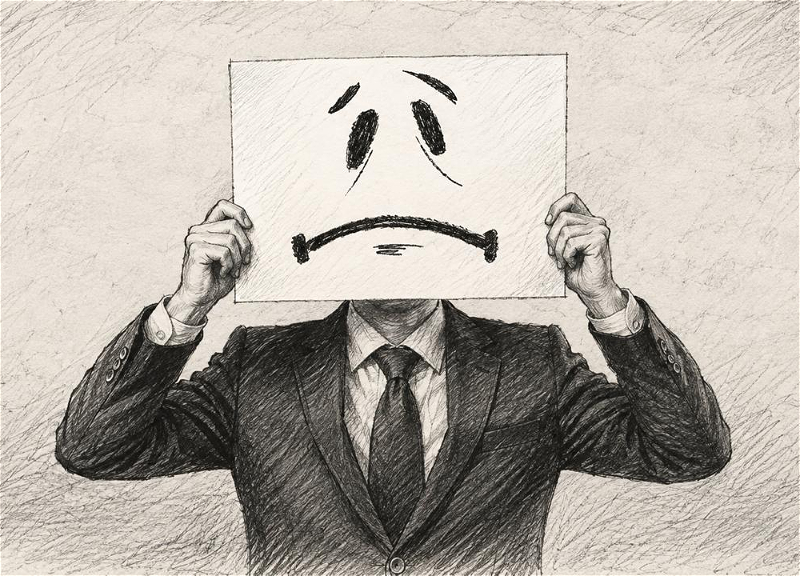
Europe takes to the streets, while European governments keep looking for someone to blame

European capitals increasingly resemble powder magazines, where a single spark is enough for the streets to fill with protesters and for police cordons to come under a hail of stones and pyrotechnics.
Not long ago, European politicians took pleasure in lecturing the rest of the world on democracy, social responsibility, and the quality of public administration. Today they have to explain to their own citizens why the promised prosperity keeps receding beyond the horizon, and why the customary social guarantees are gradually turning into something that must be fought for.
On October 31, this problem made itself felt once again in France and Germany. And this is no longer a matter of isolated local demonstrations by disgruntled students or yet another trade union action. People from different generations and social groups are taking to the streets, united by the feeling that the state machine works primarily for itself, while society's real problems remain for years without a convincing solution.
France. The Macron model of governance under pressure
For Emmanuel Macron, the current wave of protests is becoming yet another serious test. For the third Saturday in a row, French cities have been engulfed by mass demonstrations, and what was initially a youth movement has gradually taken on a broader social character. According to France's Interior Ministry, around 320,000 people took to the streets on October 31, including 70,000 in Paris. The organizers estimate the scale of participation to be considerably higher. To maintain order, the authorities deployed 70,000 police officers and gendarmes.
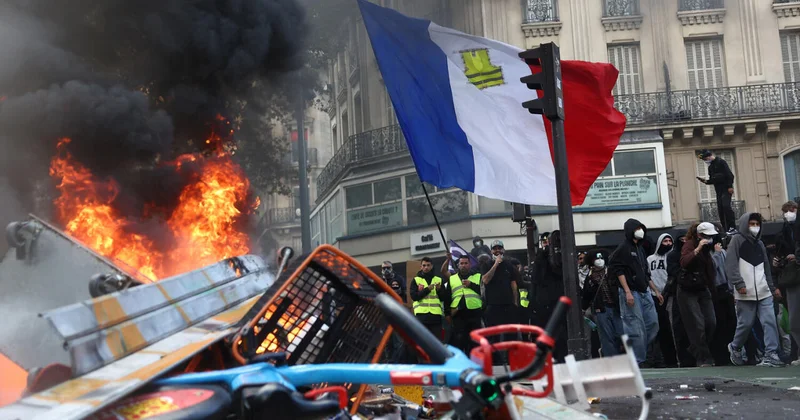
The figures themselves say a great deal, but even more telling is the makeup of the protesters and the list of their demands. Schoolchildren are protesting against the unsatisfactory condition of educational institutions, the shortage of teachers, and problems with university admissions. Students are talking about the cost of education and of living; trade unions are demanding better social conditions and increased funding for public services. Representatives of the "yellow vests" have also joined the movement, for whom issues of purchasing power and social inequality have long been central.
In other words, French society is presenting the authorities with a bill on several fronts at once. And this bill was not drawn up in a single month, nor as a result of any one particular political decision. Behind it lie accumulated discontent over the high cost of living, housing difficulties, a sense of social injustice, and the conviction that state institutions are coping ever more poorly with their basic obligations.
Macron, who came to power with promises of modernizing France and overcoming political stagnation, is now facing the consequences of systemic contradictions that his presidency has failed to resolve. Political instability, difficulties in pushing through budget decisions, and the absence of a convincing parliamentary consensus seriously limit the government's options. Even Prime Minister Sébastien Lecornu, in trying to offer concrete answers to schoolchildren, is forced to take into account the cabinet's extremely limited financial capacity and the lack of stable parliamentary support.
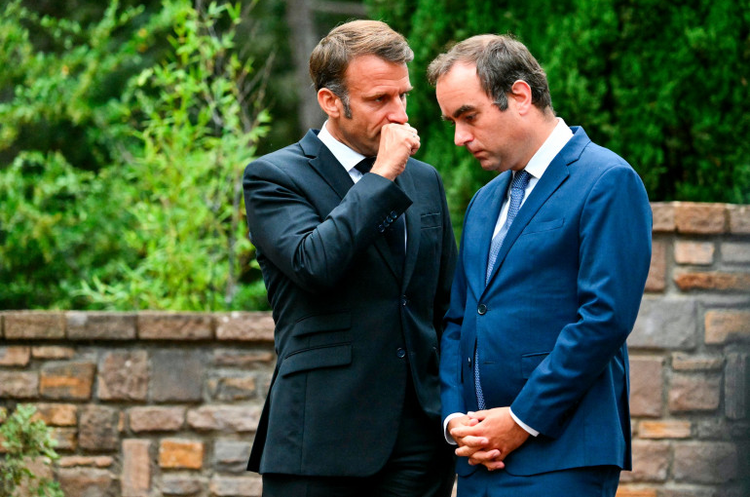
In such a situation, promises of reform no longer make the impression they once did. When young people demand decent school buildings, a sufficient number of teachers, and clear prospects for admission and employment, talk of the need to wait for yet another round of transformations sounds less and less convincing.
It is particularly worrying that social discontent is accompanied by growing confrontation between protesters and law enforcement agencies. In France, tear gas, water cannons, and other dispersal measures have been used. Clashes occurred in Lyon; in Paris, after the demonstrations ended, individual groups of participants confronted the police. Most of the protests were peaceful, but episodes of violence provide further evidence of just how tense the situation has become.
The authorities' attempts to place a significant share of the responsibility for the escalation on the far-left party La France Insoumise also fail to resolve the main question. Political forces can exploit public discontent for their own purposes, but they do not create out of nothing the problems that drive hundreds of thousands of people onto the streets. One cannot endlessly explain a social crisis by the machinations of radicals without answering the question of why citizens have accumulated so many grievances against the state.
Germany. The young generation no longer wants to pay for others' miscalculations
No less telling is the picture in Germany. On October 31, the Gen Z regelt initiative organized rallies in 34 cities. Tens of thousands of young people took to the streets, although the organizers' initial expectations had been considerably higher. They are demanding increased funding for schools and universities, better access to medical services, measures against the rising cost of living, social justice, and the abandonment of plans to reinstate compulsory military service.
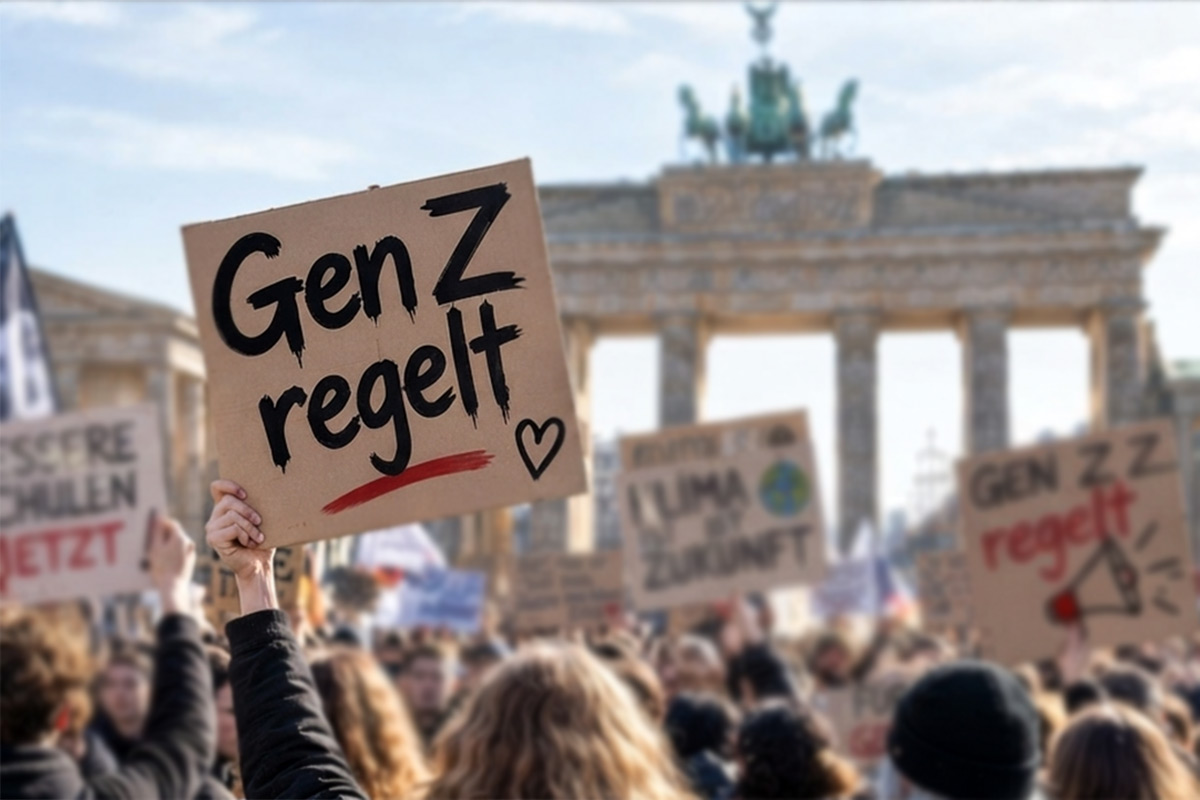
In Hamburg, Cologne, Bremen, and other cities, there were clashes with police. In some cases water cannons were used, participants threw pyrotechnics and various objects at law enforcement officers, and in Hamburg barricades were set on fire. At the same time, in most cities the rallies were largely peaceful.
But far more important is the substance of the demands. For decades, Germany was regarded as one of Europe's most stable economies, a state with powerful industry, a developed social system, and a high standard of living. Today, however, even here the young generation increasingly faces questions that until recently seemed more characteristic of less prosperous countries.
The energy factor is telling. According to Germany's Federal Statistical Office, in September 2026 consumer prices rose by 3.3% year on year, while energy prices surged by 14.9%. In October, overall inflation slowed somewhat, but energy goods still cost 12.2% more than a year earlier. For households, businesses, and social infrastructure, this means an additional burden that cannot be eliminated by political statements alone.
Added to this are problems of economic growth, employment, the pension system, and labor shortages. Young Germans see that ever greater responsibility for the country's future is being demanded of them, while at the same time they are being asked to put up with insufficient funding for education, rising costs, and uncertainty about their own prospects.

Particular irritation is caused by the prospect of the return of compulsory military service. For a generation that expects to manage its own life, the prospect of state interference in personal plans becomes yet another source of discontent. Young people are effectively asking the authorities why it is they who must bear additional obligations at a time when the state cannot convincingly guarantee the quality of education, medical care, and the affordability of a normal life.
A crisis of promises is becoming a crisis of trust
The French and German events have their national specifics, yet behind them a common European problem can be discerned. For many years, European governments have grown accustomed to relying on the notion of stability supposedly ensured by developed institutions, social mechanisms, and economic capabilities. But recent crises have shown how vulnerable this construction is when energy, migration, economic, and demographic contradictions intensify all at once.
Energy instability increases the costs borne by businesses and the population, limits the competitiveness of industry, and forces governments to look for additional funds to support the economy. The migration problem, in turn, remains one of the sharpest sources of public polarization. Questions of integrating newcomers, the burden on housing, schools, and social services, security, and the distribution of budget resources have long moved beyond narrowly specialized discussions. They directly influence the political mood of European societies.
At the same time, it would be a mistake to explain all of Europe's difficulties exclusively by migration or energy. The problem runs much deeper. European governments simultaneously face the need to finance social obligations, support industry, increase defense spending, and solve accumulated infrastructure problems. And the resources and political consensus needed to accomplish all these tasks are clearly insufficient.

The result is a dangerous gap between the scale of the promises and the ability to deliver on them. Politicians talk about the green transition, technological leadership, social protection, and strategic autonomy, but citizens want to know why everyday life is becoming more expensive, why there are not enough teachers, why difficulties arise with affordable housing, and why public services do not match the tax burden.
Instead of convincing answers, what is often offered are new programs, yet more commissions, and additional promises. Meanwhile, public patience is not infinite. The French protests show how quickly the discontent of a single social group can grow into a broad movement, while the German demonstrations testify that even the young generation, which until recently was seen as relatively removed from traditional street politics, is ready to present the state with entirely concrete demands.
Europe should also consider another circumstance. If states possessing serious economic resources, developed industry, and many years of experience in social governance cannot provide their citizens with confidence in the future, then the problem clearly is not limited to a lack of money. It concerns the quality of political decisions, the authorities' ability to set priorities, and their readiness to answer for the consequences of their own mistakes.
France and Germany still remain two major European states with substantial capacity to overcome internal difficulties. But political authority cannot exist indefinitely apart from the quality of life of the population. And if European leaders want to halt the further spread of social discontent, they will have to move from familiar rhetoric to decisions whose results citizens will be able to feel not in yet another pre-election promise, but in their own daily lives.
Otherwise, the street will continue to do the work that governments and parliaments are coping with ever more poorly.