189 countries in one city: Baku hosts a tournament football has never had

The first FIFA U-15 World Cup and Festival begins today in Azerbaijan's capital. By the number of countries represented it is the biggest football event on the planet, and its opening page will belong to Baku forever.
On Oct. 24 Baku opens a competition that has never existed in the history of football. The FIFA U-15 World Cup and Festival is being held for the first time, and the FIFA Council took the decision to create it only in December last year. Preparations in Azerbaijan were carried out in line with President Ilham Aliyev's order on measures to hold the first world championship and festival of football for boys under 15 in 2026.
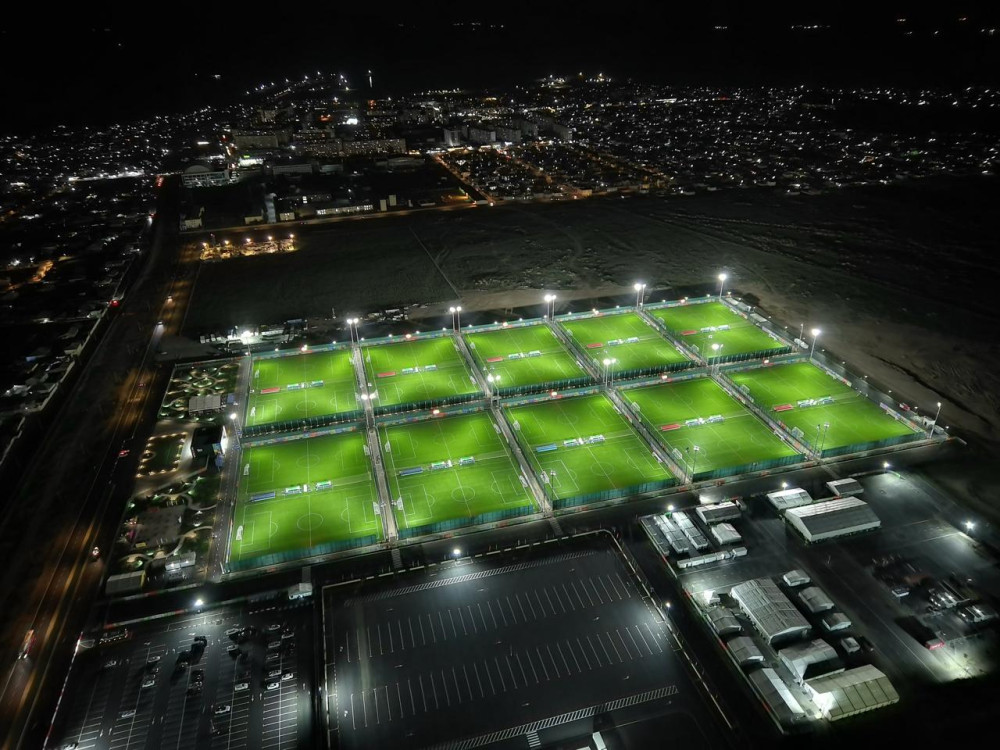
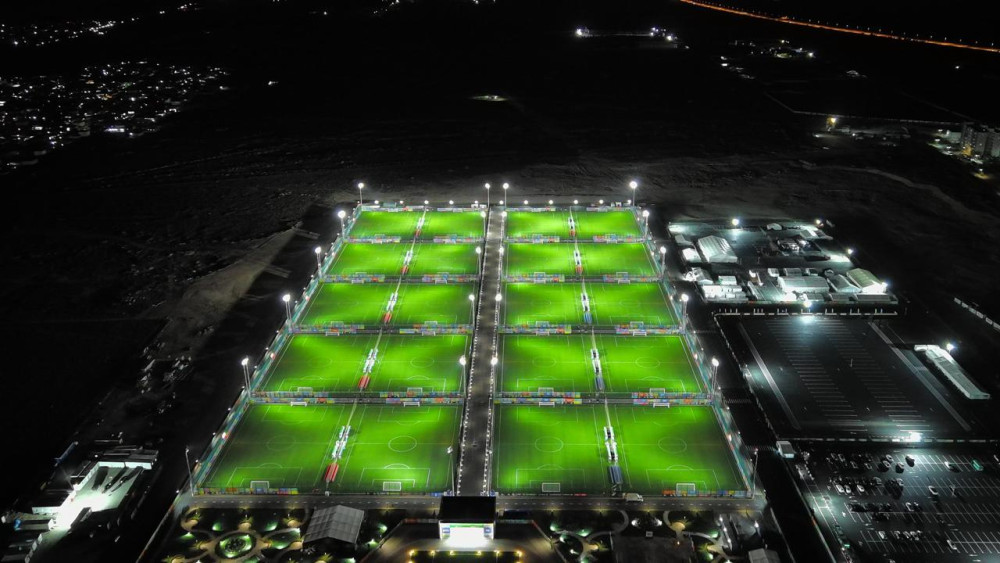
The scale of this tournament is best grasped in figures. Around four thousand young footballers, coaches and officials have come to Baku, representing FIFA member associations from 189 countries. On the ten pitches of the Hovsan complex, some one thousand matches will be played over six match days: about one hundred and sixty a day, with up to twenty games at once at peak hours.
For comparison: at the 2026 World Cup, expanded to 48 teams, the national sides of 48 countries played. The tournament in Baku has gathered 189, that is, almost nine tenths of all FIFA members. By the number of states represented, this is an event of Olympic reach packed into one week and one sports complex.
A premiere, not another edition
There is a distinction here that is easy to miss. Normally cities and countries compete for the right to stage the next edition of a long-established competition: a Champions League final, a European Championship, a stage of the world championship. The winner joins someone else's calendar and takes its place there alongside dozens of predecessors.
In the case of the U-15 World Cup there are no predecessors. The tournament starts its count from zero, and the first line in its history will forever be Baku, just as Athens remained in the history of the modern Olympic Games and Montevideo in the history of the World Cup. From 2027 the tournament will be held for girls, and from 2028 associations will be able to enter both teams, and however many editions take place afterwards, the count will run from October 2026 in Azerbaijan.
The logic of the competition itself is no less different from the familiar one. The tournament is built so that everyone plays: the teams are divided into six divisions, nobody goes out after a defeat, and every side plays at least nine matches. FIFA's Chief of Global Football Development, Arsene Wenger, explained the idea simply: talent is everywhere, but far from every young player has an equal chance of reaching the international level.
What has been built for it
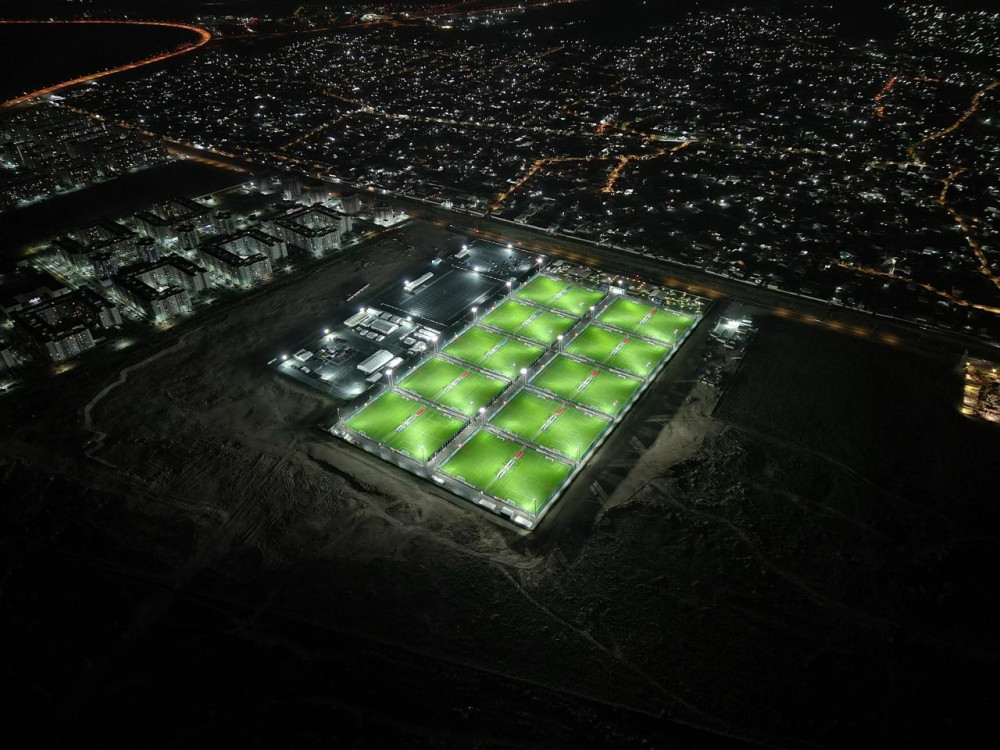
The main venue of the tournament is the Hovsan complex, where all the necessary infrastructure has been created: ten pitches laid out in two rows, a service area, parking, access roads. The opening match and the final games will be played at Baku Crystal Hall.
A separate task is to house and look after four thousand people living as a single team village, and to keep running a schedule in which matches are counted in the hundreds. Around 250 volunteers have been brought in to service the tournament, recruited by AFFA together with FIFA from September onwards.
A tournament of this density requires not so much large stands as managerial precision: running twenty matches at the same time, the work of refereeing crews, medical services, transport and catering, a task few cities in the world can handle.
This work was coordinated by the Organizing Committee headed by Deputy Prime Minister Samir Sharifov. Preparations on the football side were led by AFFA President Rovshan Najaf, whose work was singled out in September by FIFA President Gianni Infantino, who thanked him for his support and leadership. It is this coordinated work that has allowed Baku to come to the start of the tournament fully ready.

Why Baku
The choice of Azerbaijan as host of the first tournament in history is logical, and it is explained by the consistent state policy that President Ilham Aliyev has pursued over two decades: building modern sports infrastructure across the country, broadening international cooperation and shaping the reputation of a country able to stage an event of any size.
The record speaks for itself. In June 2015 Baku hosted the first European Games in history: 50 national Olympic committees, around six thousand athletes, twenty sports. In 2016 the city staged a Formula 1 round for the first time, and it has been a fixture ever since. In 2019 the Baku Olympic Stadium hosted the Europa League final, and in 2021 matches of the European Championship.
Large-scale events in Azerbaijan long ago ceased to be purely sporting. In November 2024 Baku hosted the 29th UN Climate Change Conference, one of the largest international gatherings in the world, which brought together tens of thousands of participants and delegations from almost every state on the planet, and it was here that a new climate finance goal of 300 billion dollars a year was agreed.
Note too that the 2015 European Games were also the first of their kind. Azerbaijan is thus becoming for the second time the point from which the history of a new international competition begins, and that is trust of a different order than the right to stage the next edition.
A map that is no longer the same
Only a generation ago the list of cities hosting the biggest football events was short and almost unchanging, and the right to stage world-level tournaments remained in practice the privilege of a few European and South American capitals.
Today that map looks different. The 2026 World Cup was hosted by the United States, Canada and Mexico, the 2034 World Cup will be held in Saudi Arabia, and next year Azerbaijan and Uzbekistan will jointly host the World Cup for players under 20. Football has ceased to be a game whose center is fixed to a few points on the map.
The tournament beginning today on the outskirts of Baku is clear proof of that. 189 flags on ten pitches in Hovsan, four thousand teenagers from countries on every continent, a thousand matches in six days. For most of these youngsters this week will be the first international experience of their lives, and they will get it in Azerbaijan.