Mines against peace: why Azerbaijan continues to pay the highest price
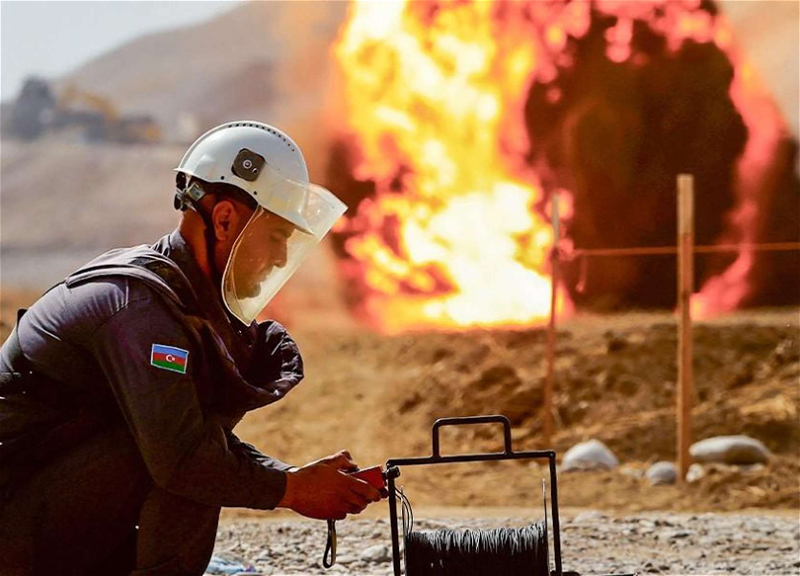
Elzamin Vazir oglu Surkhayly, 32, and Fizuli Rizvan oglu Mirzoev, 28 — employees of a non-governmental organization involved in humanitarian demining operations in the liberated territories — were injured yesterday when they stepped on a mine in the Aghdere district.
The incident occurred while the sappers were performing their duties in the village of Chardaghly. As a result of the anti-personnel mine explosion, Elzamin Surkhayly (born in 1994) sustained a serious injury and his right lower leg was amputated. Fizuli Mirzoev (born in 1998) was diagnosed with multiple shrapnel wounds to the anterior abdominal wall.
At present, this is the most recent, but by no means the only, case of a mine explosion in which citizens of Azerbaijan have been injured. Such cases occur regularly, taking lives and maiming people. The tragic incident in Aghdere has become yet another reminder of the scale of the mine threat that Azerbaijan continues to face years after the end of hostilities.
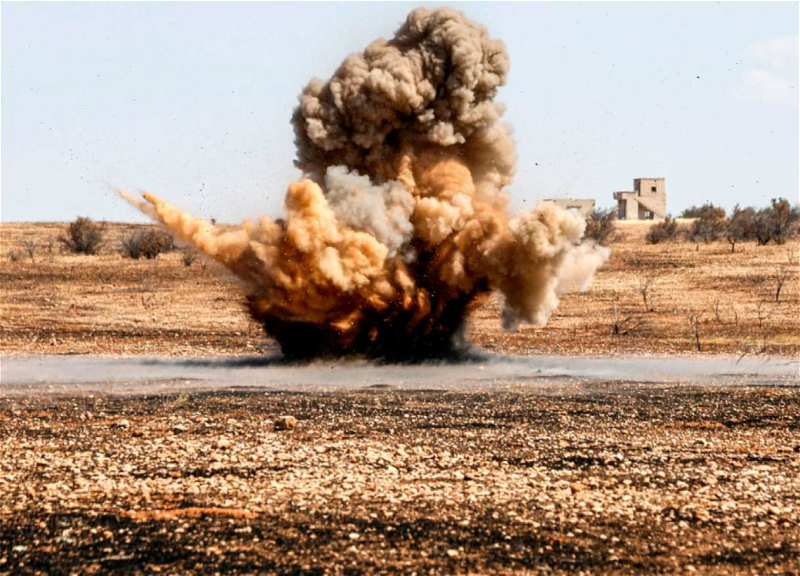
According to Azerbaijan's Ministry of Foreign Affairs, since the end of the 44-day Patriotic War of 2020, the total number of Azerbaijanis who have become victims of mine contamination caused by Armenia has reached 433 people.
In its statement on the latest incident, the Foreign Ministry emphasized that this tragedy is yet another stark reminder of the continuing heavy toll on human life and the constant threat that civilians face every day.
"The massive and deliberate mining of Azerbaijan's territories continues to remain the main obstacle to the safe return of former internally displaced persons to their homes, as well as to the carrying out of reconstruction work in the region," the foreign policy agency said in a statement on the social network X.
Baku emphasizes the urgent need to strengthen international support and pressure on the Armenian side in order to obtain accurate maps of minefields, as well as to provide assistance to Azerbaijan's large-scale humanitarian demining efforts. "Creating a region free of the mine threat is an indispensable and fundamental condition for ensuring sustainable peace, security and development," the Ministry of Foreign Affairs of Azerbaijan stated.
From 2020 to 2023, new mined zones extending up to 500 km were created by the Armenian side on the territory of Azerbaijan. After the anti-terrorist operation of September 2023, more than 500,000 mines were discovered in the liberated territories — this figure alone clearly demonstrates the scale of the mine terror.
Today, when large-scale construction and reconstruction work continues in the liberated territories, when new cities and villages are being built practically from scratch in Karabakh and East Zangezur, declared "green energy" zones by the president of Azerbaijan, every mine remains not only a deadly threat to people's lives, but also a serious obstacle on the path to the region's revival. Each new explosion slows down the restoration of the liberated territories, the implementation of major infrastructure projects, and complicates the safe and dignified return of former internally displaced persons to their native homes.
One of the main reasons for the continuing increase in the number of victims remains Armenia's refusal to provide accurate maps of minefields. Over the years of the conflict, the Armenian side carried out large-scale mining of roads, cemeteries and other civilian facilities, including in territories beyond the former line of contact. According to official data, over almost 30 years of occupation, more than 1.5 million mines were laid on the territory of Azerbaijan, as a result of which about 12% of the country's territory remains contaminated with mines and unexploded ordnance.

While many states are leaving armed conflicts in the past and focusing on peaceful development, Azerbaijan, remaining one of the countries most contaminated with mines and unexploded ordnance in the world, is still forced to live under a daily mine threat. Even years after the end of the war, its consequences continue to take lives, maim people and hold back the return of peaceful life to the liberated territories.
Today Azerbaijan is mobilizing significant resources to accelerate the demining process. The clearing of territories is carried out using modern technologies and advanced international practices. At the same time, the country finances this work almost entirely from domestic resources. Despite support from foreign partners, the overall volume of international assistance remains extremely limited.
President Ilham Aliyev consistently draws attention to the scale of the mine threat, noting that the complete demining of the territories will require the country almost 30 years and 25 billion U.S. dollars. "The mine threat that Azerbaijan has faced can be compared to the horror caused by weapons of mass destruction" — these words of the Azerbaijani leader particularly accurately reflect the depth and severity of the problem the country faces.
Yesterday's mine explosion in Aghdere is not just another tragic incident, but a manifestation of a deep problem for which Armenia has still borne neither legal nor political responsibility. It once again confirmed an obvious truth: mines continue to kill and maim not because "there was not enough time to clear them" or "not everything has been found," but because they were laid on such a scale that cannot be explained by anything other than a deliberate intention to make the process of returning life to the liberated lands as difficult and slow as possible and, if possible, to derail it.
That is precisely why there is an urgent need for immediate international support — not in formal declarations, but in real, practical and systemic assistance capable of accelerating the demining process. Azerbaijan, which is investing enormous resources in the restoration of the liberated territories, the construction of roads, power transmission lines, schools and hospitals, is at the same time forced to carry out work on an almost front-line scale to clear the land of mines left in violation of fundamental norms of international law. This burden could be fairly shared by the world community if humanitarian principles were truly put into practice. Each new explosion is a reminder that the path to peace consists not only of diplomatic statements, but also of a daily struggle against the consequences of a policy whose consequences continue to threaten human lives.
That is why Baku once again calls on the international community not to stand aside and, taking into account the full seriousness of the mine threat in Azerbaijan, to step up support for efforts to eliminate it. The scale of the problem requires not words, but concrete and decisive action. Only such support will make it possible to accelerate the restoration of the liberated territories, bring closer the return of people to their native homes and save human lives.