"Middle powers, unite!" — Carney and Stubb's new approach to world politics
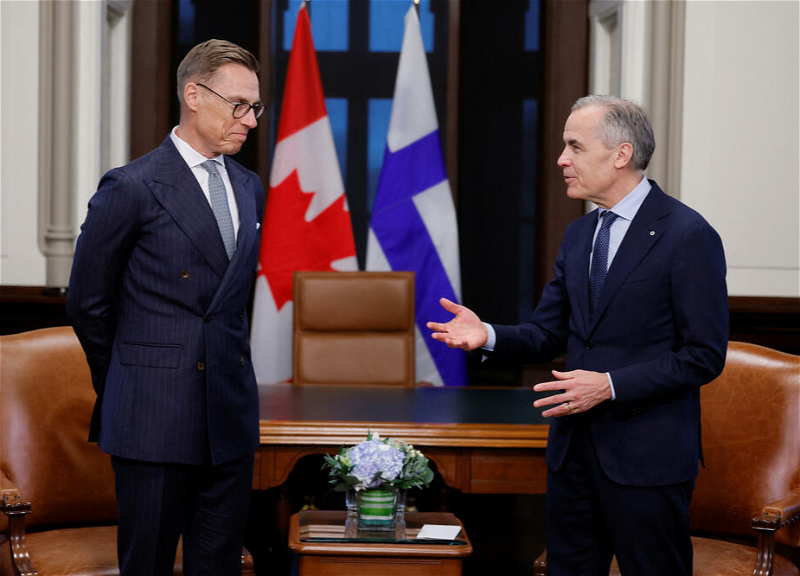
Canadian Prime Minister Mark Carney and Finnish President Alexander Stubb argue in a joint article for the influential publication The Economist that the familiar world order is changing rapidly, and that flexible international coalitions formed around specific tasks and shared interests should be the effective response to the new challenges.
Neither naive multilateralism nor cold realpolitik works any longer, the politicians believe, proposing a concept of "values-based realism" that combines a commitment to democratic principles with a pragmatic approach to international cooperation.
We offer the article titled "Prepare for a world of ad hoc coalitions" to the attention of readers:
"We lead two countries that cannot afford the luxury of relying on the former geographic order. Finland shares a border with Russia, which is waging an aggressive war against Ukraine and actively interfering in the affairs of other societies instead of reforming its own country. Canada has the longest land border in the world with the United States, which is reassessing its priorities and transforming all of its trade relationships.
At the same time, we are strengthening relations with powers such as India, as well as — while avoiding strategic dependence — with China, and with the countries of the Global South, since power is no longer concentrated exclusively in a single Western center. Today it is distributed among three groups: the Global West, the Global East and the Global South, each of which is becoming increasingly independent. Truly global trends, including control over computing power, data and artificial intelligence models, are giving rise to a fourth, technologically driven group, which determines how we live, work and interact, unconstrained by state borders and accountable to practically no one.
The world order formed after 1945 is disintegrating. Existing international institutions are poorly prepared to prevent this process. We are living through a once-in-a-century moment, when our collective prosperity is determined by what exactly we decide to build and how we build it.
The work ahead requires neither naive multilateralism, which merely defends the existing state of affairs, nor cold realpolitik, which seeks to destroy it completely. The alternative is values-based realism — a new approach that is both principled and pragmatic. Principled in its commitment to the fundamental values of freedom, human rights, sustainable development and solidarity. Pragmatic in recognizing that not every partner will share all of our values. Simply put, we must form calibrated alliances: integrating deeply with those countries that share our values, and maintaining a sober outlook in relations with those that do not.
At its core, this means actively accepting the world as it is, rather than passively waiting for the world as we would like it to be. It means reckoning with the fact that progress happens gradually and that the interests of states diverge. It requires acknowledging the inevitable differences between our countries and other states, and then focusing efforts on working together where our positions coincide and where we are able to achieve the greatest results. Progress can be declared through monologue, but it can only be achieved through dialogue.
Another reality is that the world is moving from a more multilateral model to a more multipolar one. The multilateral order, for all its shortcomings, is based on cooperation and a clear set of rules and norms. A multipolar world, by contrast, is characterized by deals, transactions and chaos. However, the choice does not come down to an alternative between multilateralism and multipolarity. There is another scenario — plurilateralism. We must strive for the revival of multilateralism with fairer representation and reformed institutions. At the same time, it is necessary to develop plurilateral formats of cooperation.
Such an approach — a variety of "variable geometry" — will make it possible to create a dense network of interconnections: ad hoc coalitions formed for specific tasks. In many cases they will prove most effective precisely in engagement with those countries with which we diverge on many issues but share enough common interests to cooperate in individual areas. Dynamic coalitions created for specific goals will increasingly be formed around common interests rather than within the framework of a single common organization. The "coalition of the willing", which is currently dealing with issues of Ukraine's postwar security, has already become a leading venue where like-minded states and NATO coordinate their efforts. The European Union's instruments, including the SAFE agreement, allow partners to bypass bureaucratic barriers and quickly create joint defense capabilities and develop cooperation in the sphere of defense. The G7 alliance on critical minerals ensures the security and diversification of the supply chains on which every modern economy depends. In the sphere of artificial intelligence, we could create coalitions to increase the safety and accessibility of technologies, drawing on our knowledge and capabilities in such key areas as quantum computing and energy. The question is no longer whether to unite, but how quickly we can create successful coalitions capable of scaling in all regions of the world.
The response to the changing world order in the spheres of geography, trade and commerce — and to the anxieties that these changes quite understandably provoke among citizens — should not be regret for the world that has gone, but the building of the world as it is today. Building with the help of software code, concrete and steel; with the help of effectively functioning institutions and strong alliances capable of defending them. It is necessary to deepen our countries' partnership relations with as many states of the world as possible, acting soberly, confidently and with open eyes.
Middle powers of the world, unite!
In these efforts Canada and Finland are capable of playing a key role, since our countries are among the most interconnected economies in the world thanks to broad access to international trade; possess significant potential, increasing defense spending to a record level; and are guided by a common commitment to the principles of territorial integrity, human rights and pluralism. In a rapidly changing world we have resilience and sisu — the inner strength, perseverance and endurance characteristic of Finland — to chart the way forward. And we know that many others share these qualities, which is why we invite them to join us on this path."
Source: The Economist