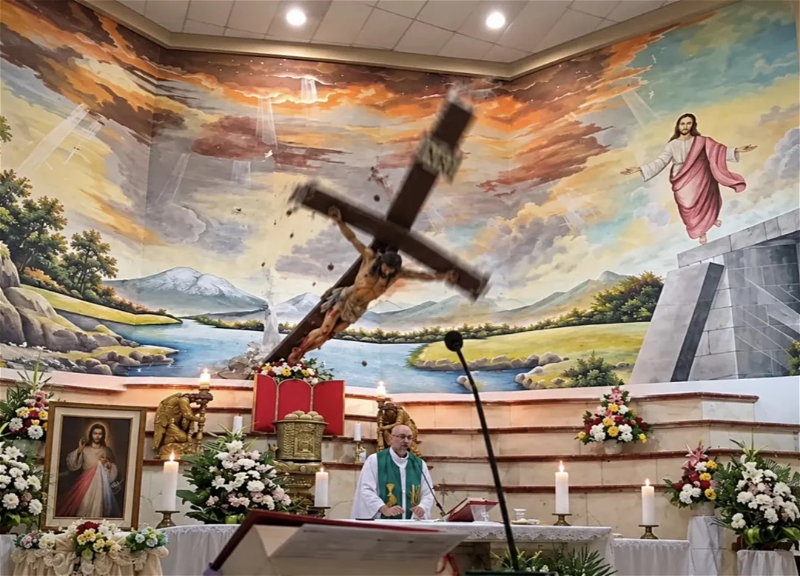
The Yabloko party was removed from the State Duma elections over "May There Always Be Sunshine"
Russia's Supreme Court granted the application of the Rodina party to cancel the registration of the Yabloko party's list of candidates in the State Duma elections scheduled for September 18-20, Kommersant reports.
The court found that Yabloko had committed violations in the use of intellectual property. According to the Central Election Commission, an interview with the party's co-founder Grigory Yavlinsky titled "How to vote for a ceasefire" is considered pre-election campaign material. The party failed to prove that it had permission to use in the interview the words from the song "May There Always Be Sunshine," the emblems of political parties, images of Dmitry Medvedev and Victoria Bonya, as well as footage from Sergei Bondarchuk's film "War and Peace."
During the closing arguments, a representative of the Prosecutor General's Office spoke in favor of removing Yabloko from the elections. According to him, the party had committed violations in the use of intellectual property, and foreign financing had been discovered in its case. At the same time, the prosecutor noted that the arguments about Yabloko violating legislation on countering extremism had not been confirmed.
A representative of the Central Election Commission told the court that a document had been received from Rosfinmonitoring, according to which candidates for State Duma deputies from Yabloko had received foreign financing in the period preceding the year of the elections, and that among the party's counterparties several legal entities had been found that had received funds from foreign sources. At the same time, the Central Election Commission representative noted that the issue of financing cannot be the subject of consideration in the current lawsuit, but may become the subject of consideration in another case.
The chairman of Yabloko, Nikolai Rybakov, in his closing statement urged the court to reject the lawsuit on removing the party from the elections. According to him, the removal of the party is a blow to the political system, to the parliamentary elections and, in general, to parliamentarism in Russia. "I do not know how to explain to the plaintiff's representatives that we are supported by people who do not want to be killed," Nikolai Rybakov said. "We work in Russia in very difficult conditions, given our position. It is fundamentally important for us to remain in Russia. However, we will defend our vision within the framework of the electoral process — with the people among whom we live, who want to live in Russia and believe in the future of our country."