
The boycott that did not happen: Europe is heading to Poland, and Oceania declined to demand a change in FIFA's leadership
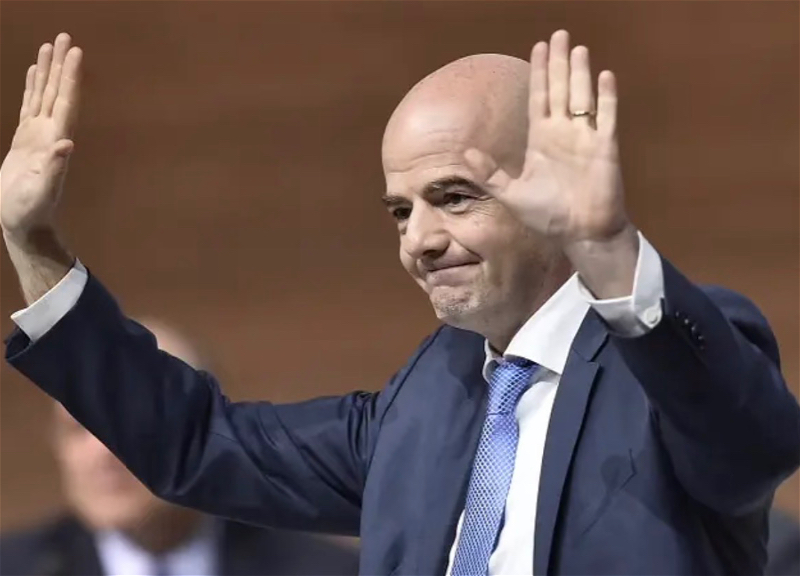
The first practical test of the boycott begins on September 5, and so far there is little reason to believe in it. Federations of developing countries back Infantino, while UEFA is discussing separate tournaments with the AFC and CONCACAF — a tactic it itself challenged in the case of the Super League project
Not one of the six European teams entered in the FIFA U-20 Women's World Cup has notified Poland of its withdrawal from the tournament. This is reported by BBC Sport, citing its own information. The competition will take place from September 5 to 27 and will become the first FIFA tournament that could be affected by the boycott announced by UEFA and all 55 of its members.
Lydia Bedford, head coach of England's women's under-23 team, who will lead the side at the tournament in Poland, said the instruction from the leadership of the Football Association of England is to "just carry on as normal." She spoke about the possible boycott for the first time in an interview with BBC Sport in Portugal, after her team beat their Portuguese counterparts 2-0 in a friendly match in Lisbon. Bedford took up her post in March of this year.
"I was actually at the theater in London when my father unexpectedly called me, and I was like, "What's going on?" From my point of view, the message from the leadership all this time has been "just carry on as normal" — and that's what we've been doing," Bedford said.
"We haven't really even discussed it with the players, because ultimately we need every opportunity to get out on the pitch and prepare this team so that we're in the best possible shape. So all the attention has been on that," she added. Bedford will name her squad for the tournament next week.
Poland midfielder Weronika Arasniewicz also spoke out against the boycott. "Don't do it. Let the football happen. Let's enjoy football," she told BBC Sport. "I would definitely be upset if the tournament were canceled, because events like this are always special, and you don't know how many more World Cups you have ahead of you."
The position within English football is not unanimous. National team defender Lucy Bronze, one of the country's most decorated footballers, previously said that a boycott of FIFA tournaments would be the right decision "for the good of the game," despite the possible consequences for women's football. Bedford, asked about those remarks, avoided commenting: "From my point of view, my only focus is preparing this team, and if we have the opportunity to go to Poland, we'll be there and we'll fight when we arrive."
Thirteen out of fifty-five
The number of European federations that have withdrawn their support for Gianni Infantino's re-election has grown only slightly over the past week. On August 13, the Football Association of Ireland did so — the only addition to the list in recent days.
"The Association is grateful for the support FIFA provides to Irish football, but recent events have raised serious concerns regarding governance, transparency and the absence of meaningful consultation," the statement says. The decision was taken at a board meeting, the letter of support sent earlier this year has been withdrawn, and FIFA has been notified separately of the reasons.
The Irish Football Association of Northern Ireland did not formally withdraw its letter, but supported UEFA's position: "We take our responsibilities as a member association of both UEFA and FIFA seriously. We support UEFA's current position on this matter and will continue to engage constructively on football governance issues."
According to the Irish Times' count, thirteen of the fifty-five European associations have withdrawn their support: Wales, England, the Netherlands, Germany, Romania, Greece, Croatia, Serbia, Albania, Finland, Sweden, Norway and Ireland. The remaining forty-two have not withdrawn their letters.
As 1news.az reported, withdrawing a letter of support and refusing to take part in a tournament are actions of fundamentally different weight. The first has no sporting consequences and is reversible at any moment; the second means the loss of points, broadcasting contracts and disciplinary risks. The nature of the letters themselves is also telling: Infantino requested them from the associations ahead of the World Cup and, according to media reports, received more than two hundred — that is, from almost all FIFA members.
Oceania has closed the map
On August 14, the Oceania Football Confederation issued a statement — the last of the six continental confederations to have refrained from stating a position. The document was adopted following an executive committee meeting on August 12.
The OFC "welcomes FIFA's decision to withdraw the FFE proposal and its commitment to conduct a review of the issues connected with the project." What follows is wording that clearly diverges from the tone of UEFA, CONCACAF and the AFC: "The OFC acknowledges the progress made over the past decade in the development of football in Oceania under FIFA's leadership and calls on FIFA to use the review as an opportunity to identify and implement any necessary changes."
The confederation stresses the importance of "proper governance, transparency and respect for established institutional processes," but does not demand a change of leadership and does not mention Infantino. The statement concludes with a commitment to continue "constructive dialogue and close cooperation with member associations, FIFA, other confederations and all interested parties."
Thus, the picture has taken final shape: three confederations have come out against Infantino, three have not.
The argument of an equal vote
On the same day, the Caledonian Football Federation, a member of the OFC, published its own statement. The document is signed by its president, Steeve Legras, and is built around the argument most often voiced in this dispute by small federations.
"Today, under FIFA's development programs, the CFF receives the same level of support and funding as federations from all the other confederations — UEFA, CAF, AFC, CONMEBOL, CONCACAF or OFC," the statement says. And further: "This will for fairness is also expressed at the very heart of democratic governance at FIFA Congresses: the vote of the Caledonian Football Federation carries the same weight there as the vote of the biggest nations in world football. For the CFF, this democratic principle constitutes a fundamental pillar of international sports governance."
The federation also cites a concrete result: in March of this year, the New Caledonia national team played a World Cup qualifying playoff match against Jamaica at the Estadio Akron in Guadalajara in front of more than 45,000 spectators.
"For the Caledonian Football Federation, the strategic plan being implemented by FIFA's current leadership makes a significant contribution to the development of football in Oceania and strengthens the influence of our region. The CFF will continue to defend this vision of an open, fair and united world football, in which every federation enjoys equal attention," Legras said.
A similar statement was issued by the St. Kitts and Nevis Football Association, a member of CONCACAF. The association thanked FIFA for its financial and technical support over the past ten years, noting that it was precisely thanks to this that in 2023 it qualified for a major international tournament for the first time in its history. The key wording matches that previously used by Mexico and Grenada: "We will not support any member association or confederation that seeks to undermine these processes or weaken the unity and governance structures of the global football family."
Separate tournaments and the shadow of the Super League
On the other side of the conflict, an escalation of a fundamentally different order is taking place. According to the Irish broadcaster RTÉ, UEFA has held preliminary talks with the AFC and CONCACAF about coordinating their own tournaments — so that players under their jurisdiction retain meaningful opportunities to compete.
This is no longer a boycott but a bid for a parallel structure of world football, and here a historical parallel inevitably arises.
In April 2021, twelve European clubs announced the creation of the Super League. UEFA and FIFA then presented a united front and threatened to exclude the clubs from their national championships and to bar the players from the World Cup and the European Championship. The project collapsed within two days. UEFA's argument at the time — that football cannot be a closed commercial project serving the interests of a narrow group — coincides almost word for word with the one the confederation is using today against the FFE.
No one will now be able to repeat the 2021 tactic. On December 21, 2023, the Court of Justice of the European Union ruled that FIFA and UEFA rules making the creation of new tournaments by third-party organizers contingent on their prior approval and providing for sanctions against participants constitute an abuse of a dominant position — since they are not backed by transparent, objective, non-discriminatory and proportionate criteria. The Commercial Court of Madrid subsequently ordered both organizations to cease this conduct and, where possible, to eliminate its consequences.
FIFA and UEFA were co-defendants in that case — and they lost together. Today the European confederation turns out to be the beneficiary of its own defeat: the court ruling that stripped it of the right to block other parties' tournaments also removes the obstacles to its own. FIFA, therefore, has few mechanisms to force the confederations to abandon parallel competitions. The conflict will most likely remain in the realm of votes rather than sanctions.
"Go to an election"
This is exactly what the president of the Confederation of African Football and FIFA vice-president Patrice Motsepe is calling for.
"If someone has a problem with someone — with Gianni or with anyone at all — follow the procedure, follow FIFA's procedure, that's all," he told Sky News. "If you want to remove him, go to an election, let the 211 member associations decide. Do it, and the vote will show whether they have confidence in him or not."
Nominations are being submitted until November 18, and the vote will take place in March 2027 at the FIFA Congress in Morocco. No requests have been submitted for the convening of an extraordinary Congress, which requires written applications from 43 associations.
The first answer, however, will come sooner — on September 5 in Poland.
The Association of Football Federations of Azerbaijan has not publicly stated its position.