Kazakhstan restores oil production after decline caused by attacks on CPC
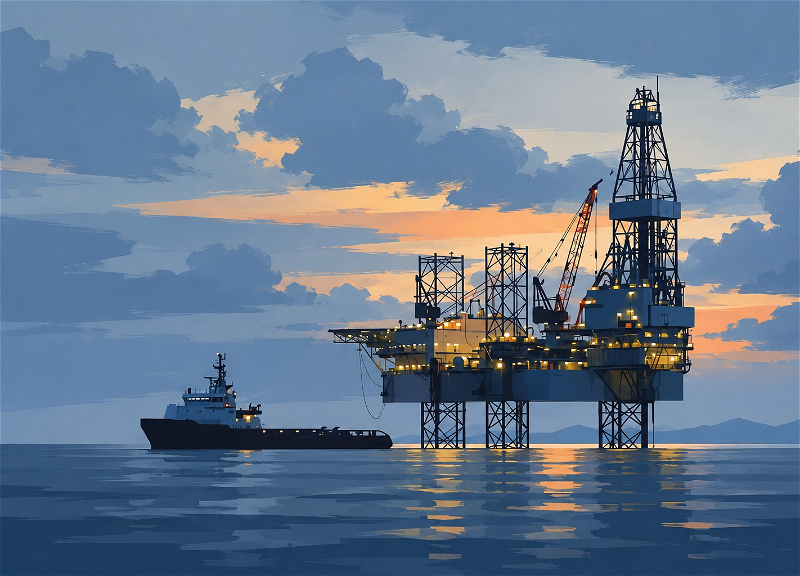
Kazakhstan has currently restored to stable levels the oil production that had earlier been reduced because of incidents at the Caspian Pipeline Consortium (CPC).
As reported by the Ministry of Energy, at present the country's oil production is being maintained at a stable level and no decline in oil volumes is observed.
The agency recalled that in July "oil production at large fields was below plans as a result of the suspension of shipments at the CPC."
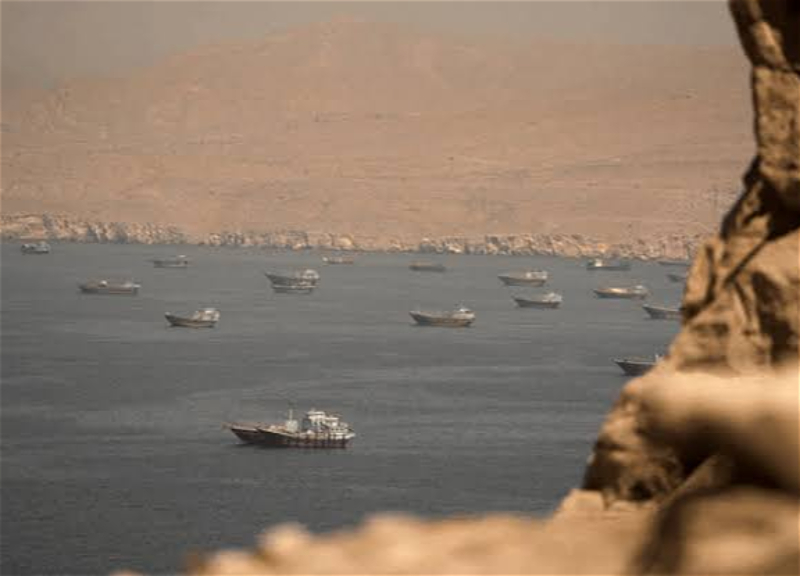
Earlier, in the waters of the CPC marine terminal, tankers were repeatedly subjected to UAV attacks. Thus, between July 17 and 20, the tankers Nelsa, Asia, Nissos Ios and Nordic Zenith were attacked. On July 20, the consortium reported the halt of oil shipments at the marine terminal, and later it was forced to suspend the intake of oil into the system as well. Because of this, Kazakhstan had to reduce its level of oil production.
On July 27, Kazakhstan's Ministry of Energy reported the resumption of oil transportation via the Tengiz-Novorossiysk pipeline and of shipments at the marine terminal.
On July 30, the CPC again suspended shipments after the Marshall Islands-flagged tanker Nissos Sifnos was attacked and caught fire during loading; its shipper was Tengizchevroil LLP.
At the same time, 6 nautical miles from the CPC marine terminal, the Isle of Man-flagged tanker Marathi, which was heading to take on oil, was attacked.
On Tuesday, the head of Kazakhstan's Ministry of Energy, Yerlan Akkenzhenov, reported that Kazakhstan will have to revise downward its oil production plan for 2026 — from 98 million tons to 96 million tons — due to disruptions in oil shipments into the CPC system. According to the minister, because of the incidents at the CPC in January and July, Kazakhstan lost 3.5 million tons in oil production.
The CPC provides transportation of oil from three large Kazakh fields: Tengiz, Kashagan and Karachaganak. The volume of transshipment in 2025 amounted to about 70.5 million tons, with more than 75% accounted for by foreign shippers, among which the largest are Tengizchevroil (Chevron Corp.), ExxonMobil, KazMunayGas NC JSC, Eni, and Shell. The transshipment forecast for 2026 is 72 million tons of oil.
The CPC connects the oil fields of western Kazakhstan and Russian fields on the Caspian shelf with the marine terminal in Novorossiysk on the Black Sea. The length of the route is 1,500 km. The system is the main export route for Kazakh oil, accounting for more than 80% of the volumes pumped through pipelines from Kazakhstan. The CPC is capable of transporting about 72.5 million tons of oil per year from Kazakh territory and up to 83 million tons of oil per year through Russia.
The company's shareholders are the Russian Federation (24% managed by Transneft, 7% on its balance sheet) — 31%, Kazakhstan (represented by KazMunayGas — 19% and Kazakhstan Pipeline Ventures LLC — 1.75%) — 20.75%, Chevron Caspian Pipeline Consortium Company — 15%, LUKOIL International GmbH — 12.5%, Mobil Caspian Pipeline Company — 7.5%, Rosneft-Shell Caspian Ventures Limited — 7.5%, BG Overseas Holding Limited — 2%, Eni International N.A. N.V. — 2% and Oryx Caspian Pipeline LLC — 1.75%.
Source: Interfax