Calls for terrorist attacks and fakes about the army: A court in Russia sentences Oleksiy Arestovych in absentia
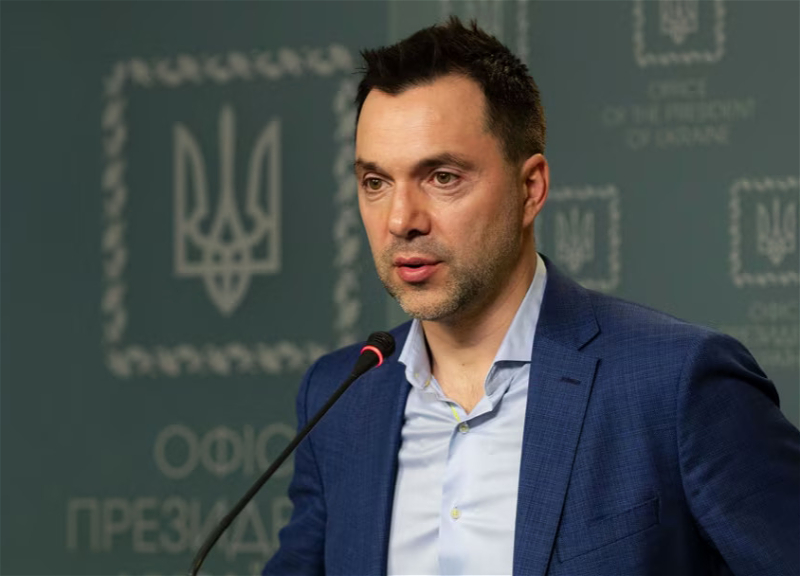
The Second Western District Military Court sentenced in absentia to 11 years in prison the former freelance adviser to the office of the president of Ukraine, Oleksiy Arestovych (included in Russia's list of terrorists and extremists), finding him guilty of calls for terrorism and spreading fakes about the Russian army.
The court reported this to TASS.
"For the totality of the crimes, Arestovych was finally given a punishment in the form of imprisonment for a term of 11 years, with the first three years to be served in prison and the remainder of the term in a general regime penal colony. The court also deprived him of the right to engage in activities related to the administration of websites and channels using electronic or information and telecommunications networks for a period of 4 years," the statement says. The verdict has not entered into legal force and can be appealed.
As the press service of the Prosecutor General's Office of Russia told TASS, Arestovych was found guilty under Part 2 of Article 205.2 of the Criminal Code of the Russian Federation (public calls for carrying out terrorist activity, committed with the use of electronic and information and telecommunications networks) and Part 2 of Article 207.3 of the Criminal Code of the Russian Federation (public dissemination, under the guise of reliable reports, of knowingly false information containing data on the use of the Armed Forces of the Russian Federation).
According to the Prosecutor General's Office of Russia, it was established that on March 17, 2022, Arestovych, who at that time was a freelance adviser to the office of the president of Ukraine, published on his official pages on social networks and on a video hosting site a video address in which he called for terrorist activity by destroying railways used for the movement and supply of Russian troops. In addition, on April 8, 2022, Arestovych posted online a publication containing knowingly false information about an alleged shelling by servicemen of the Armed Forces of the Russian Federation of the railway station in Kramatorsk, as a result of which at least 33 people died and about 100 more civilians were injured.
The criminal case was considered in absentia, since the investigation took exhaustive measures to search for and extradite Arestovych, but there is no real possibility of his participation, as he is hiding outside the Russian Federation and has been put on the international wanted list.
The state prosecution in court was supported by a representative of the Prosecutor General's Office of Russia.