
Did Washington give Riyadh a nuclear carte blanche?
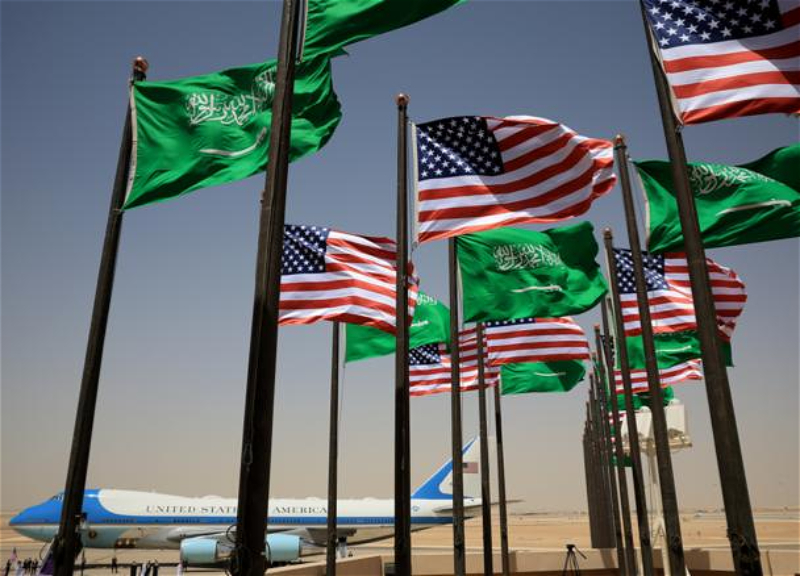
The agreement between Washington and Riyadh on cooperation in the peaceful use of atomic energy provides for the possibility of enriching uranium up to 20%.
This is reported by The Wall Street Journal (WSJ), citing the text of the document submitted for review to the U.S. Congress.
As the publication notes, the agreement does not grant Saudi Arabia automatic permission to enrich uranium on its territory. At the same time, the document provides for a number of steps that could, over the course of several years, allow an enrichment facility to be launched.
Under the terms of the deal, within two years American and Saudi officials must study the "economic feasibility" of uranium enrichment, as well as develop safeguards against the risks of nuclear weapons proliferation. If the parties conclude that enrichment is necessary, American companies, together with foreign suppliers, will build a facility that will make it possible to enrich uranium up to 5%. Subsequently, the level of enrichment could be raised to nearly 20%, the newspaper writes.
At the same time, WSJ emphasizes, the text of the agreement does not contain a requirement for Saudi Arabia to normalize relations with Israel and join the Abraham Accords.
On July 22, the U.S. Department of Energy issued a statement on the conclusion of an agreement with Saudi Arabia providing for Washington's support of the kingdom's peaceful nuclear program. According to the document, the agreement is designed for several decades and should "open up broad opportunities for American companies to participate in the Saudi nuclear energy development program."
Later, U.S. President Donald Trump stated that approval of the deal "depends entirely on Saudi Arabia joining the Abraham Accords."
The Abraham Accords were concluded by Israel and a number of Arab countries through U.S. mediation in 2020–2021. In 2020, Bahrain, Morocco, and the United Arab Emirates normalized relations with Israel. In 2021, Sudan announced the establishment of diplomatic relations with Israel.
Before the conclusion of these accords, Israel had diplomatic relations among Arab states only with Egypt, which established them in 1979, and Jordan, in 1994.
In August of last year, Trump called on all states of the Middle East to join the Abraham Accords. In his opinion, this should "ensure peace" in the region. Saudi Arabia, for its part, demanded as a condition for recognizing Israel the development of an irreversible path toward the creation of a full-fledged Palestinian state.