In Nepal, the warning came 38 minutes after the avalanche
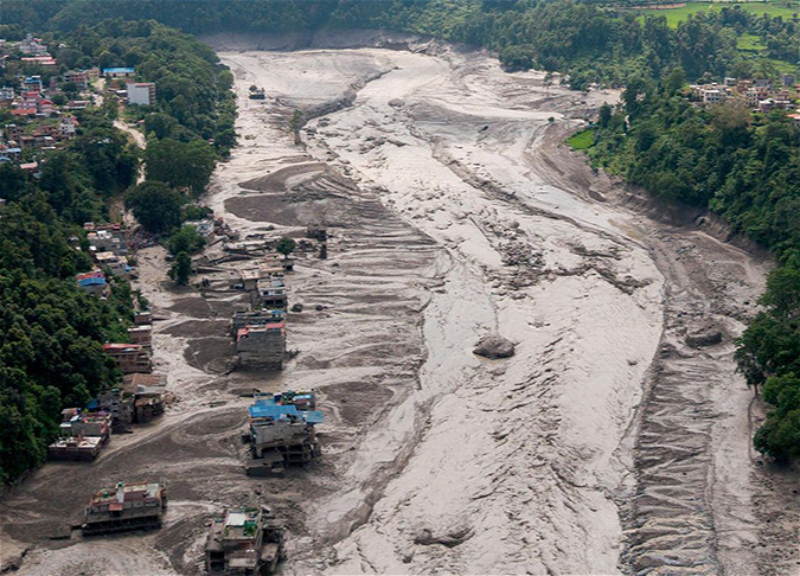
The alert from the warning service about the natural disaster in Nepal, which claimed more than 1,200 lives, came only 38 minutes after the avalanche, when the flow of rock traveled more than 70 km along the riverbed at enormous speed, destroying settlements and flooding a large area.
This was reported by The Kathmandu Post newspaper, citing sources.
According to experts, the likelihood of predicting this catastrophe in real time was minimal due to the absence in the Himalayan country of a unified early warning system (EWS).
Nepal has no such system, said Anil Pokhrel, former head of the National Disaster Risk Reduction and Management Authority (NDRRMA). The presence of sensors does not mean, in his words, that this constitutes "a system." It must include a proper assessment of who and what is in the risk zone, a network of monitoring tools to forecast danger in real time, a comprehensive communication plan for timely alerts, and emergency preparedness.
After the disaster, Kathmandu decided to upgrade the natural disaster EWS on the border with China, equipping it with seismic sensors, cameras, and satellite communications. Its central element will be the VSAT (Very Small Aperture Terminal) satellite system, designed to maintain communication between monitoring posts even when mobile service is down, Reuters reported, citing sources.
The country has declared the need to immediately create such a system — taking into account the "adaptation of the landscape" after the large-scale avalanche, which "could trigger several more landslides." The current head of the NDRRMA, Dharma Raj Upreti, told the agency that new monitoring stations are being built to replace the destroyed ones, and that new cameras are being installed. "This will make it possible to obtain information about river flow in real time, and in accordance with this the authorities will send out SMS messages" in the event of natural disasters, Upreti said.