
India puts an "all-seeing eye" into orbit
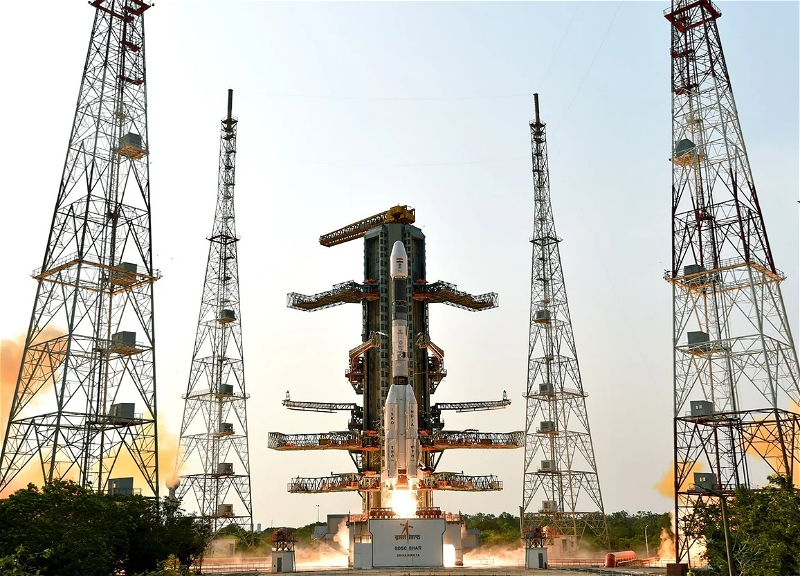
The Indian Space Research Organisation (ISRO) has successfully launched the country's first imaging satellite designed to operate in geostationary orbit.
The payload was placed into its designated orbit using a GSLV launch vehicle.
The organization reported this.
"I am happy to report that the GSLV F-17 launch vehicle has successfully and precisely placed the advanced geostationary imaging satellite EOS-05 into its designated orbit," said ISRO chief Vanniyaperumal Narayanan.
According to data received from the satellite, all of its systems are functioning normally, and the solar panel has been successfully deployed. "The satellite's condition is excellent," the ISRO chief noted.
The organization stated that EOS-05 has a mass of more than 2,300 kg, making it the heaviest spacecraft ever placed into orbit by a GSLV rocket. The flight proceeded in accordance with the designated trajectory.
While many Earth observation satellites operate in low Earth orbit, EOS-05 will be positioned at an altitude of about 36,000 km — in geosynchronous orbit, where the speed of its movement is synchronized with the speed of the Earth's rotation.
ISRO called the satellite an "all-seeing eye." It will transmit images in real time and be used in such fields as agriculture and disaster relief.
Indian Prime Minister Narendra Modi praised the successful launch of GSLV-F17. According to him, the mission demonstrates the "highest level of skill, innovation and growing potential" of the country's space industry and will contribute to the development of India's entire space ecosystem.