Foreign Policy: The next UN leader will be either a secretary or a general
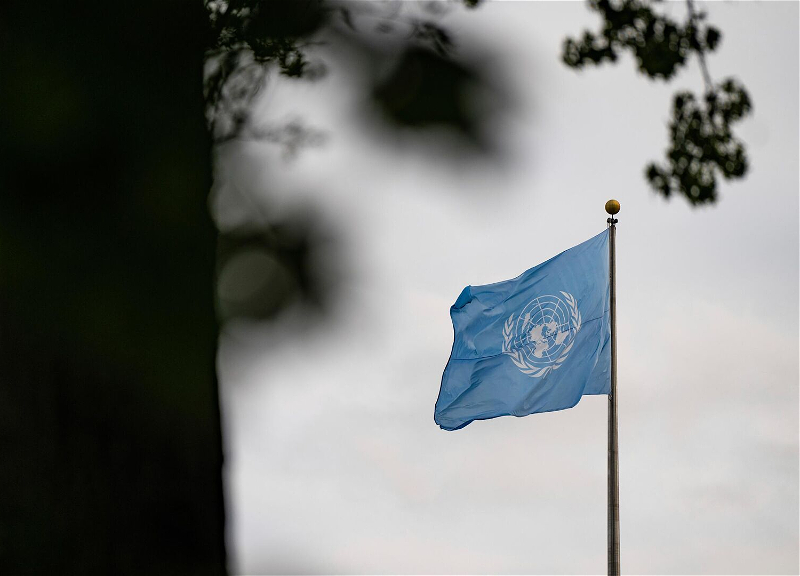
For a world mired in conflicts and desperately in need of an impartial mediator, the election of the next secretary-general of the United Nations could not have come at a more opportune moment, writes the American publication Foreign Policy.
"The UN's top official is supposed to be the chief peacemaker — at least in theory — and, perhaps even more importantly, the keeper of the collective moral compass regardless of national affiliation. Is any of the eight candidates ready for this task?
As the race gains momentum, a former UN diplomat who spoke with Foreign Policy on condition of anonymity joked that the key question is whom the "Five" (P5) — the five permanent members of the Security Council holding veto power — want to see: a secretary or a general.
A "general" could take active leadership in settling the various conflicts that have engulfed the world and try to revive an institution struggling to preserve its relevance at a time when regional players are offering their own mediation services, while the UN itself is bogged down in its own bureaucracy and undermined by the United States, its largest donor.
However, the influential countries that have the decisive say in the final decision appear to prefer a "secretary" — someone capable of managing the colliding interests of the world powers without drawing excessive attention to themselves.
The current UN chief, António Guterres, has had a hard time under U.S. President Donald Trump, who makes no secret of his contempt for everything the United Nations embodies: respect for due process, human rights, international law, and the equal status of all members of the family of nations. Guterres's successor will have to navigate a minefield, since the United States openly ties its funding to the advancement of its own national interests as Trump sees them.
Yet Trump's lack of faith and transactional approach will not be the only problem.
China is the second-largest contributor: its share has grown from 1% in 2000 to 20% this year, comparable to the 22% of the United States. China is also estimated to provide more than 23% of the organization's peacekeeping budget, only slightly behind the 26% of the U.S. Insiders say Beijing is demanding a greater role in decision-making.
Meanwhile, Russia intends to continue using its position in the UN Security Council (UNSC) to gain leverage in other theaters. The United Kingdom and France also hold veto power, but their geopolitical weight matters less and is not expected to affect the outcome of the election.
The selection process has already begun: the 15 members of the Security Council have held two rounds of straw (informal) polls — a procedure conducted to determine whether any of the five permanent members plans to block a candidate.
Based on the results of these soft straw polls, as well as on the principles of geographic rotation that the UN often observes, most believe the next leader will come from Latin America. In particular, the main contest is thought to be unfolding among four Latin American candidates, three of whom are women.
Former Vice President of Costa Rica Rebeca Grynspan is among the front-runners. She led in the first straw poll of the UNSC, which, in addition to the five permanent members, includes 10 non-permanent members. The vote is divided into three categories: "encourage," "discourage," and "no opinion." Winning requires 9 "encourage" votes and no veto from the permanent members. In the first round, Grynspan's candidacy was "encouraged" by 10 countries, and only one expressed concerns.
If the choice falls on her, she will become the first woman and the first person of Jewish origin to head the UN — and this at a time when Israel's relations with the organization have hit rock bottom.
Trump shares Israel's distrust of certain UN bodies operating in the Middle East, such as the United Nations Relief and Works Agency for Palestine Refugees in the Near East (UNRWA), tasked with caring for Palestinian refugees displaced as a result of the 1948 Arab-Israeli war, and the United Nations Interim Force in Lebanon (UNIFIL). The U.S. refusal to extend UNIFIL's mandate has effectively destroyed that structure — its mandate expires at the end of the year.
There is no direct connection between Grynspan and the Israeli establishment, nor are there any hints that she would sympathize with Israeli policy. On the contrary, she has criticized both Hamas and "the continued bombardment by the IDF, striking civilians, hospitals, shelters, schools, and UN facilities in Gaza."
Israel's attitude toward Grynspan remains unclear, but she may have incurred the wrath of the U.S. when, heading the UN Conference on Trade and Development (UNCTAD), she warned of the negative impact of American trade tariffs on developing countries.
As head of UNCTAD, Grynspan worked closely with China on development projects. She is among four of the eight candidates who visited Beijing in recent months to discuss their plans for the UN and who, according to the Chinese mission to the organization, declared their commitment to the "one China principle" — a veiled expression of support for China's position on Taiwan.
Russia may make its decision based on its experience of working with her on the Black Sea Grain Initiative, which temporarily allowed grain exports to continue after the start of the Russian-Ukrainian war. However, in the second round of voting, Grynspan's standing in the Security Council slipped: she received seven votes "for" and four "against."
Rafael Grossi of Argentina, head of the UN nuclear watchdog — the International Atomic Energy Agency (IAEA) — is a better-known name in this contest. According to the former UN diplomat who spoke with Foreign Policy, Grossi is perhaps the most preferred candidate for the United States thanks to his experience working on the Iranian file. Any settlement of the crisis around Iran and its nuclear program would almost certainly require UN inspections, and Grossi could offer valuable expertise.
"If anything distinguishes me from the other candidates, it is that I am dealing with very sensitive and delicate issues with all of them right now. With what is happening in Iran, Syria, Ukraine," Grossi said, referring to cooperation with the "Five." "So I believe that this working methodology, which I have managed to establish with all of them, gives grounds to expect that it can be replicated at the UN as well, but with great circumspection."
However, Russia has already voiced its objections. In his current role, Grossi also monitors the Russian-occupied Zaporizhzhia nuclear power plant in Ukraine and has apparently irritated Moscow. In August, the Russian government criticized him for canceling a trip to the plant on security grounds, seeing in this a rebuke of Russian security measures at a key facility, and instead accused Ukraine of refusing to guarantee his safety.
Russian Foreign Ministry spokeswoman Maria Zakharova also criticized the way Grossi covers the Russian-Ukrainian war and characterized his words about a "slowly dying" UN as an attempt to score "additional points" ahead of the election. China may also fail to support Grossi — either in Iran's interests or to appease Russia, Beijing's "no limits" partner. There are rumors that even the United Kingdom is set against Grossi because of the ongoing sovereignty dispute with Argentina over the Falkland (Malvinas) Islands.
In both votes Grossi retained seven votes "for," but the number of "discourage" votes rose from two to six. And he is not the only one who, while enjoying U.S. support, nevertheless has yet to make the cut.
Ecuadorian diplomat Ivonne A-Baki entered the race after the first round of voting, following a meeting with the U.S. president. If that meeting was meant to demonstrate a U.S. blessing, it did not work. Her result in the second — and only round of voting in which she participated — was dismal: not a single UNSC member voted "for." Some experts said this is a sign that ties with Trump alone are not enough to boost one's numbers.
"Traditionally, candidates entering the race at later stages perform poorly in the voting. The Security Council needs time to familiarize itself with the candidates," the former UN diplomat noted.
In addition, there are candidates opposed most likely by both the U.S. and China.
Michelle Bachelet, Chile's first female president, lost ground sharply between the first and second votes — from six "for" votes in July to two in August. Bachelet could receive a nod from Russia, but it will be difficult for her to win U.S. approval: she is a socialist and a former UN high commissioner for human rights.
However, the force blocking Bachelet may turn out to be China. In 2022, under her leadership, the UN human rights office issued a scathing report on alleged violations of the rights of the Uyghur community in Xinjiang, alleging torture, sexual violence, and possible crimes against humanity.
"China will never forget this," the former UN diplomat said. At the time, China reportedly even tried to shelve the report.
That leaves two African candidates and two more representatives of Latin America.
Olara Otunnu of Uganda and former Senegalese President Macky Sall, who is also a former chairman of the African Union, are in the race but occupy shaky middle positions in the polls. Sall maintained his numbers in both votes, but nearly half of the UNSC — 7 of 15 members — voted against him.
"At this stage, the "against" votes matter more. If you have 7 negative votes, it means there is a high chance that one of the veto powers has objections," said Syed Akbaruddin, former Indian ambassador to the UN.
Former Foreign Minister of Guyana Carolyn Rodrigues-Birkett and former Foreign Minister of Ecuador María Fernanda Espinosa are top contenders alongside Grynspan. The Guyanese candidate topped the list following the second vote. Espinosa, despite fewer "for" votes, shared with Rodrigues-Birkett the smallest number of negative votes in that round.
In the UN's 80-year history, the top post has never been held by a woman, and only once has it been held by a representative of Latin America. A Latin American UN chief could prove useful for Trump, especially given that Washington's latest National Security Strategy places particular emphasis on the Western Hemisphere.
It appears the main competition will unfold among the Latin Americans. However, there is no consensus candidate yet, and new figures may enter the race in the final months.
According to the New York Post, Trump himself has backed Gianni Infantino, head of the world football federation FIFA, and some sources claim the U.S. has considered Nickolay Mladenov, head of the Board of Peace for Gaza created by Trump.
There are concerns that Trump could nominate a real estate agent or a member of his family, but fears that the U.S. will withdraw from the UN and jeopardize its existence are exaggerated, Akbaruddin believes. "Even in the past the U.S. called for budget discipline; I remember the Reagan era," he said. "And fears that any of the 'Five,' who benefit most from the UNSC, would want to destroy the organization are overblown."
The United States needs the UN to do the "dirty work," the former UN diplomat emphasized. "If you don't want to send American troops to solve a problem but you want to impose your solution, whom do you turn to? The UN formed the gang suppression force in Haiti; the UN sends peacekeepers; and the UN approved the Board of Peace for Gaza created by Trump. And the U.S. pays 25% of the costs, not the entire sum, because others cover the rest."
The United Nations needs the United States, but the United States also needs the legitimacy and weight of the only universal organization — or the "parliament of nations," as it is often called. The next secretary-general, like all his predecessors, will have to maneuver among the colliding interests of the world powers, especially the countries of the "Five." But the UN still has a role in making deals and establishing peace, and it must not cede this work to the G20, the G7, or the G2; instead, it should build frameworks for cooperation with regional mediators.
Despite its many shortcomings, the United Nations is still perceived as the most impartial institution, and therein lies its main asset. The UN secretary-general still commands an authority that few world leaders can boast of.
The main challenge for the new leader will be finding a way to be both a secretary and a general."