April battles – The beginning of a great military victory on the path to triumph
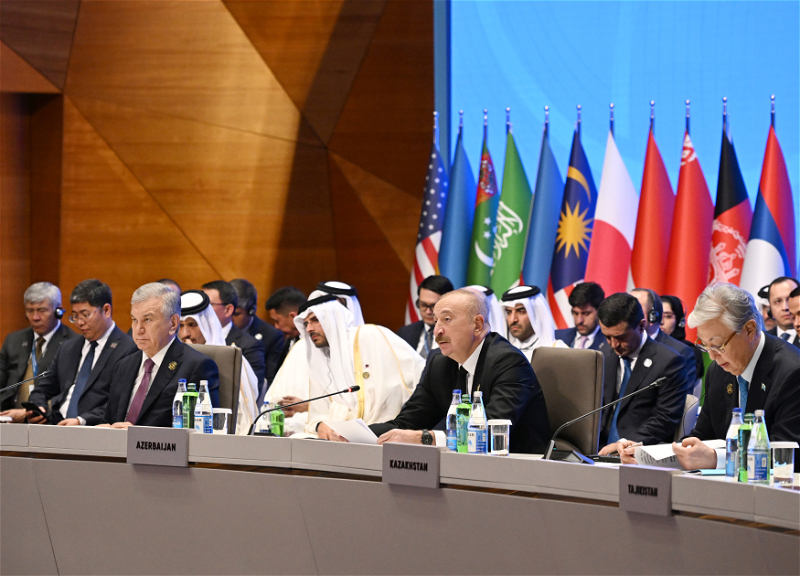
Azerbaijani President Ilham Aliyev has repeatedly exposed Armenia's occupation policy at important international events, declaring to the world that the aggressor pursues a fascist ideology and that terrorism is supported at the state level. Particularly, since 2003, the efforts of Azerbaijani diplomacy have resulted in the creation of a corresponding legal basis through documents of the UN Security Council, the Non-Aligned Movement, the European Union, the Council of Europe, the Organization of Islamic Cooperation, the Organization of Turkic States, and other international organizations regarding the resolution of the Karabakh conflict. First and foremost, the four UN Security Council resolutions (822, 853, 874, 884) adopted in 1993, which remained unimplemented, needed to be enforced.
At the same time, Armenia's aggressive policy and stance on the resolution of the conflict did not reflect historical realities or the true essence of the events.
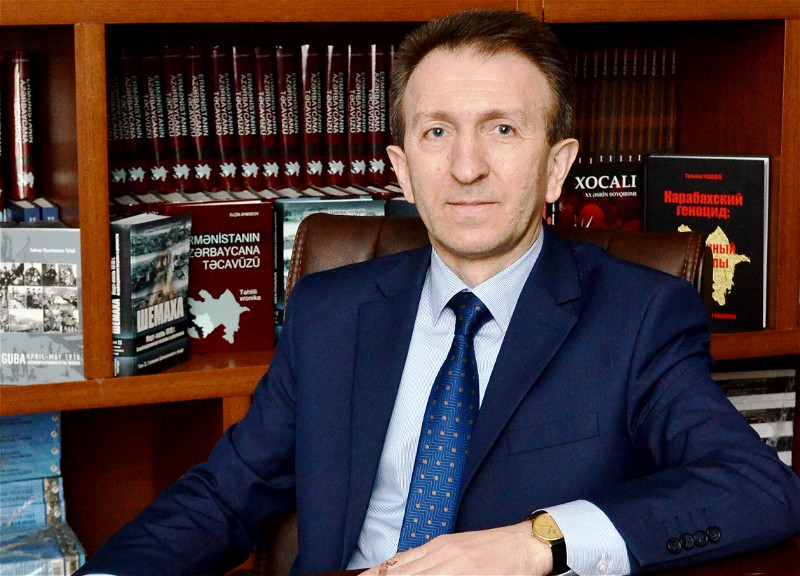
These views are expressed in an article titled "April battles – Recorded in history as the beginning of a great military victory on the path to triumph" by Elchin Ahmadov, head of the "Karabakh Heritage Research Center" at the Academy of Public Administration under the President of the Republic of Azerbaijan, professor of the Department of "International Relations and Foreign Policy," and Doctor of Political Sciences.
1news.az presents the article.
Ten years ago, it was proven that Armenia's "mighty army"
was merely a myth
It should be noted that since 2003, Azerbaijan's military expenditures have increased more than 15-fold. During this period, reforms carried out in the Azerbaijani Armed Forces under the leadership of the Supreme Commander-in-Chief created the foundation for strengthening the army's combat and moral-psychological readiness. The Azerbaijani army was equipped with the most modern weapons and technology.
The successful counteroffensive operations of the Azerbaijani Army from April 2 to 5, 2016, provided our country with significant military-strategic advantages. First and foremost, Azerbaijan achieved a crucial psychological victory. The Azerbaijani Army liberated strategically important heights in the northern and southern parts of Karabakh. Through this, Azerbaijan demonstrated its ability, potential, and determination to liberate its lands. As a result, the international resonance of the four-day battles was immediately felt, and Armenia's occupation of 20% of Azerbaijani territory was once again brought to the world's attention.
Since 2003, under the leadership of the Supreme Commander-in-Chief of the Armed Forces of the Republic of Azerbaijan, President Ilham Aliyev, steps taken to strengthen the material and technical base of the Armed Forces have enabled the Azerbaijani Army to rank among the most powerful armies in the world today.
In early April 2016, facing another military provocation by Armenia along the line of contact, our army launched a counteroffensive, delivering powerful blows to the occupiers and, in a short time, liberating 2,000 hectares of territory in the Aghdara, Jabrayil, and Fuzuli districts from the enemy, increasing control over the occupied lands.
Describing the April battles of 2016 as a glorious page in our history, President Ilham Aliyev stated: "...Azerbaijan achieved a great military victory. The Azerbaijani Army liberated parts of Aghdara, Fuzuli, and Jabrayil districts from the occupiers and raised the Azerbaijani flag on those lands. More than 2,000 hectares of land were cleared of occupiers, and an area several times larger came under our full control. We have gained complete superiority along the line of contact and can now destroy any enemy target... If they had achieved some success in their mythological activities before the April battles, those battles dealt a serious blow to their propaganda, shaking Armenian society. The consequences of that shock are still felt there today. The April events led to a deep military and political crisis there. These were still short-term battles. Therefore, they must draw the right conclusions and understand that we will never reconcile with this situation. No matter the cost, we will restore our territorial integrity."
As a result of the four-day battles, strategically important heights such as Lalatepe were recaptured from the enemy. Consequently, the security of the village of Jojug Marjanli in the Jabrayil district, which had been liberated from the enemy in 1994, was ensured. President Aliyev highlighted that as a result of the battles, new life was breathed into Jojug Marjanli, stating: "Jojug Marjanli was rebuilt in a short time, with 150 individual houses, a school, a kindergarten, a medical center, and a mosque resembling the Shusha mosque constructed, and new jobs are being created. In other words, life has returned to Jojug Marjanli. This once again shows that the Azerbaijani people will never reconcile with this situation. It also demonstrates that every Azerbaijani citizen lives with one desire – for our occupied lands to be liberated soon and for Azerbaijan to restore its territorial integrity."
Continuation of the April battles –
The Second Karabakh War and the restoration of territorial integrity
As a continuation of this, in May 2018, more than 11,000 hectares of territory in the Nakhchivan Autonomous Republic, including the village of Gunnut in the Sharur district, were liberated from the enemy. Favorable heights along the state border were captured, and the Yerevan-Goris-Lachin road came under control. As a result, thousands of hectares of land were freed from occupiers, and tens of thousands of hectares came under Azerbaijan's control.
Supreme Commander-in-Chief Ilham Aliyev, noting that we pay great attention to our military potential and have achieved significant successes in this area, stated that our army's combat capability has increased, and the successful Nakhchivan operation clearly proved this. As a result of this operation, the Azerbaijani Army gained control of strategic heights: "These heights allow us to control a vast area. The successful Nakhchivan operation once again demonstrated that our army is professional and its combat capability is at a high level. All of this is a reality. Today, every Azerbaijani citizen can rightfully take pride in the Azerbaijani Army, and we are proud of our soldiers and officers. The Azerbaijani Army is the main factor in protecting the territorial integrity of our state."
As a result, the Azerbaijani flag was raised on lands that had once been occupied. During the battles, our military personnel demonstrated professionalism and heroism, proving once again that Azerbaijani soldiers and officers are both professional and devoted to the homeland, ready to fulfill their duties at any moment and in a short time.
Under the leadership of President and Supreme Commander-in-Chief Ilham Aliyev, the Azerbaijani Army launched large-scale and successful counteroffensive operations in Karabakh on September 27, 2020, to liberate Azerbaijani lands under Armenian occupation. By November 9, 5 cities, 4 towns, and 286 villages were liberated. Over the 44 days, the city of Jabrayil and 90 of its villages, the city of Fuzuli and 53 of its villages, the city of Zangilan, the towns of Minjivan, Aghband, and Bartaz, and 52 of its villages, the town of Hadrut and 35 villages of the Khojavend district, 3 villages of the Tartar district, the city of Gubadli and 41 of its villages, 9 villages of the Khojali district, the city of Shusha, 3 villages of the Lachin district, several strategic heights in Aghdara and Murovdag directions, as well as the Bartaz, Sighirt, Shukurataz heights and 5 other unnamed heights in Zangilan, were liberated.
During the 44 days of the Second Karabakh War, Azerbaijan, guided by international law principles, particularly Article 51 of the UN Charter, exercised its right to liberate its territories through successful and large-scale counteroffensive operations. As a result, the Azerbaijani state implemented UN Security Council resolutions 874 and 884, adopted in 1993 and left unenforced for 27 years, by liberating the city of Jabrayil on October 4, Fuzuli on October 17, Zangilan on October 20, and Gubadli on October 25 from occupiers.
November 8, 2020, was recorded in Azerbaijani history as Victory Day. Under the leadership of Supreme Commander-in-Chief Ilham Aliyev, the Azerbaijani Army liberated the city of Shusha, the crown of Karabakh, which holds historical, cultural, and strategic importance. This was the most significant historical event and a great military victory during the 44 days of successful counteroffensive operations. Azerbaijan's military-diplomatic successes, particularly the liberation of the strategically important city of Shusha, significantly influenced the subsequent course and outcome of the war, determining successes not only on the battlefield but also in the diplomatic arena.
As a result of the 44-day Patriotic War, which concluded with Azerbaijan's military-diplomatic victory, the liberation of Aghdam on November 20 and Kalbajar on November 25 fulfilled the relevant provisions of the trilateral Statement signed on November 10, 2020, and determined the military-political resolution of the conflict.
Additionally, UN Security Council resolutions 822 and 853, adopted in 1993 and left unenforced for 27 years, which called for the withdrawal of occupying forces from Azerbaijan's Kalbajar and Aghdam districts, were implemented on Azerbaijan's terms. As a continuation, based on the relevant provision of the trilateral Statement, the withdrawal of Armenian armed forces from the Lachin district on December 1, 2020, is regarded as a result of Azerbaijan's military-diplomatic successes.
During a press conference on February 26, 2021, Azerbaijani President Ilham Aliyev put an "exclamation mark" on the issue of the status of Nagorno-Karabakh, stating that there is no need to give false promises to Armenia and the Armenian people. One of the reasons for their current situation was precisely illusions, claims, and unfounded desires. Politicians from some foreign countries who fueled these desires also played a role in bringing the Armenian people to this deplorable state. As he always emphasized, particularly at the Munich Security Conference, President Aliyev reiterated that Nagorno-Karabakh is Azerbaijan's ancestral land, adding that, in fact, we should no longer use the term Nagorno-Karabakh today, and that lowland and mountainous Karabakh is an inseparable part of Azerbaijan.
As a result, on September 19-20, 2023, Azerbaijan fully restored both its territorial integrity and sovereignty through localized anti-terrorism measures, creating a solid foundation for the establishment of peace in the South Caucasus region. October 15, 2023, was recorded in history as another day of honor. Supreme Commander-in-Chief President Ilham Aliyev raised the State Flag of the Republic of Azerbaijan in Aghdara, Khojali, Asgaran, Khojavend, and Khankendi.
Ultimately, the Second Karabakh War was recorded in Azerbaijani history as a chronicle of honor and heroism over the past century. Today, our sacred tricolor flag proudly waves over all liberated territories of Azerbaijan – in Jabrayil, Fuzuli, Zangilan, Gubadli, Kalbajar, Lachin, Aghdam, Shusha, Khojavend, Hadrut, Aghdara, Khojali, and Khankendi.
Azerbaijan's military-diplomatic successes also significantly strengthened our country's rightful positions in the information war, playing a crucial role in exposing, on a global scale, Armenia's fascist ideology, ethnic cleansing, genocide, state terrorism, and occupation policy against our people, as well as Armenian lies, thereby ensuring the triumph of historical justice.
In particular, the resolute statement "Karabakh is Azerbaijan and an exclamation mark" made by President Ilham Aliyev on October 3, 2019, at the XVI annual meeting of the Valdai International Discussion Club, a significant international platform, became a reality just over a year later, especially during the 44 days.
Overall, it must be noted that the April battles marked the beginning of Azerbaijan's great military victory in the Patriotic War and confirmed that Armenia's "mighty army" was merely a myth, recorded as such in history. Under the leadership of Azerbaijani President and Victorious Supreme Commander-in-Chief Ilham Aliyev, the valiant Azerbaijani Army conducted large-scale counteroffensive operations to liberate our lands, which had been under occupation for nearly 30 years, restoring territorial integrity. At the same time, the Azerbaijani Army not only shattered the "invincibility" mythology created by the enemy over these years but also dealt a severe blow to the propaganda machine built on lies during the 44 days, resulting in the exposure of Armenia's aggressive policy and its patrons.