The first critical arrows have been launched at Prime Minister Andy Burnham
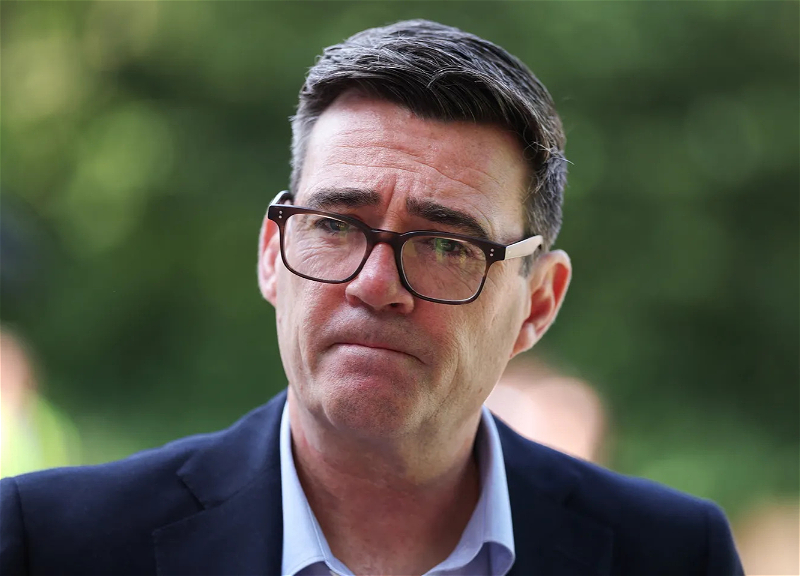
On August 11, The Telegraph sharply criticized British Prime Minister Andy Burnham, who became the seventh head of the United Kingdom's government in the past 10 years, over his failure of the first real test of leadership — because of his "endless dithering over the early release of the killers of Police Constable Andrew Harper."
This concerns the police officer who died in 2019 after being struck by a car while carrying out his duties. Five years later, due to a shortage of prison places, the release of inmates who had served 40% of their sentences became a reality in the United Kingdom.
As The Telegraph writes, after his first steps as prime minister, which "brought practically no positive results," Burnham, having faced the first real test of his leadership since taking office, failed the exam. In particular, he showed no principled stance on the question of blocking the decision on the early release of the two killers of the police officer, endlessly changing his position. In the end, the prime minister seemed to express confidence that a solution could be found that would keep the criminals in prison, but he does not specify that path. This development of events "can hardly testify to firm leadership" on Burnham's part, since he shifted all responsibility for resolving the problem onto the shoulders of the justice minister.
In light of the above, the authors of the piece draw a parallel with the policy of his predecessor — Keir Starmer — who similarly wavered at the beginning of his premiership over reforms in the social sphere and shifted responsibility onto others, which prevented him from restoring his authority. So "it is important for Burnham to learn these lessons."
Perhaps this aspect would not be of particular significance in terms of assessing the prime minister's actions during such a minimal period in the seat of the head of government. But it is quite obvious that every step of the head of the British government is examined "under a microscope" in the context of his previous promises. .
For example, The Guardian predicts a difficult struggle for Burnham along the line of implementing the idea of a windfall tax on credit institutions. In this connection, it is noted that together the four largest British credit institutions — HSBC, NatWest, Barclays and Lloyds — reported profits of 29.2 billion pounds sterling for the first six months of 2026. And this strengthens calls for raising taxes on banks' incomes. Implementing this, according to forecasts, would help "offset the costs of the prime minister's ambitious plans to reduce the cost of living and reform the United Kingdom's social security system." True, at the same time a warning is recorded from influential heads of a number of credit institutions that decisions of this kind, "by restricting vitally important lending," raise doubts about the realization of profitable investments.
In this context, the question is voiced ever more loudly as to how far Burnham will manage to achieve the goals he placed at the forefront, including reform of the social security system or the expansion of council housing construction.
Analysts consider one of the reasons for such a scrupulous view of the new British prime minister's actions to be the notes that sounded in mid-July in his first speech as leader of the Labour Party, that is, on the path to becoming prime minister. In it, he sharply criticized the decisions taken by the famous "Iron Lady" Margaret Thatcher during her time at the head of the British government.
In Burnham's characterization, the policy of privatization, deindustrialization and political centralization carried out by Thatcher in the 1980s transformed the economy of the United Kingdom. As a consequence, the state, having given up control over essentials: housing, water, energy, transport, "left people defenseless against rising prices, which led to the concentration of greater wealth and power in the hands of fewer people and fewer places." From this perspective, Burnham brought to the fore a new path, "and not the one we have been following for the last 40 years." According to the current prime minister, the government he leads will confidently lay out this road by concentrating efforts on economic renewal, strengthening state control over key sectors and creating new modern jobs in industry.
Thus, the British prime minister has received the first critical warning bells, layered on top of a certain distrust of his promises to lead the country out of a deep economic crisis. And on top of that, according to information circulated by the media, the leader of what is called the far-right and right-wing populist Reform UK, Nigel Farage, as expected won the by-election held the day before in the Clacton-on-Sea constituency. And even though all the leading parties of the United Kingdom refused to field their candidates in this, in their words, "political show," the opposition facing Burnham in the form of the Reform UK party is very serious.
Without a doubt, to draw unambiguous (some would say hasty) conclusions today about the developing situation around his figure would be premature. But for the prime minister, failing to take into account the moods in British society would be political suicide.
Teymur Ataev