Germany may close the "Russian House"
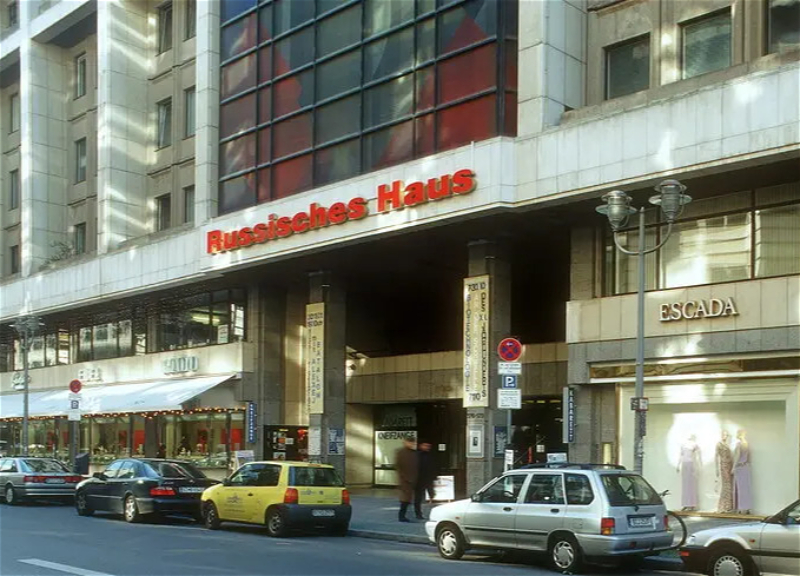
After a drone that attacked a Ukrainian AN-124 aircraft but did not explode was discovered at the Leipzig airport, a debate has flared up in Germany over the activities of the "Russian House," Spiegel writes.
Although the German government is still hesitant to publicly name Moscow as responsible for the attack, more and more evidence is emerging that Russia is behind the planned attack on the airport, the publication writes.
The German government is already discussing possible sanctions. For the first time, they could also affect the building on Friedrichstrasse in Berlin, which Moscow has declared a cultural center. According to information obtained by the publication, terminating the agreement governing the activities of the "Russian House" is no longer taboo.
Calls for sanctions against the center, which security experts also suspect of espionage activities, have been heard for some time, the publication writes.
The "Russian House" is run by the government agency "Rossotrudnichestvo." After Russia's full-scale invasion of Ukraine, it was placed on the European Union's sanctions list and its assets were frozen. However, organizations under sanctions are still allowed to own buildings and spend money on them.
The publication noted that there are two German-Russian agreements concerning the "Russian House." Both were signed by former German Foreign Minister Guido Westerwelle and Russian Foreign Minister Sergey Lavrov.
One agreement governs the use of the property on Friedrichstrasse in Berlin. It was signed on May 5, 2013, and its term is 99 years.
The other agreement was concluded on February 4, 2011, between Germany and the government of the Russian Federation. It concerns the "activities of cultural and information centers." It is precisely this agreement that can be terminated unilaterally every five years. And the next time Germany can do so is from June 7, 2027.