
On behalf of everyone, without asking each: UEFA's "unanimity" diverged from the positions of Baku and Prague
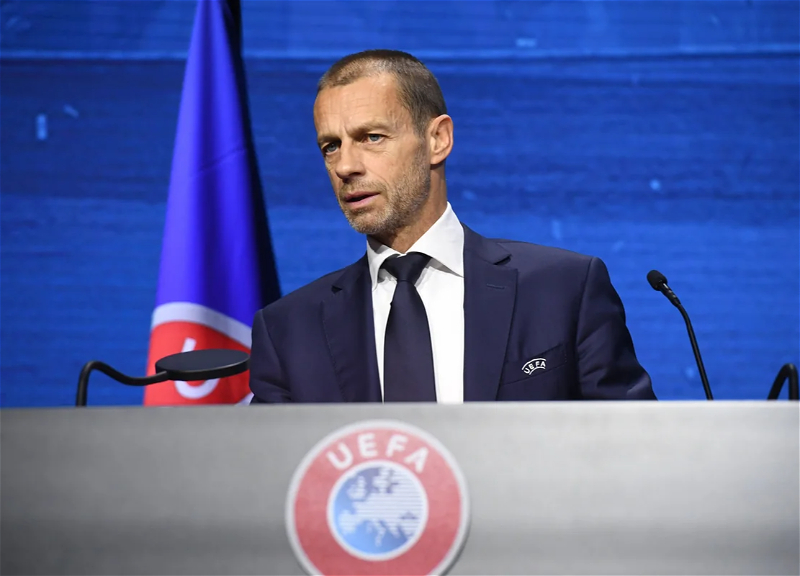
On Thursday, UEFA announced the most radical move in the recent history of world football: on behalf of all 55 national associations, the organization declared that European national teams will not take part in any FIFA tournament as long as Gianni Infantino's plan to sell stakes in the commercial rights to the World Cup to private investors remains in force.
The statement is built on the word "unanimously" — and it was precisely this word that began to raise questions within the first hours after publication. At least two European federations, it appears, did not sign up to this unanimity.
Baku: "We are studying the issue"
The first discrepancy came to light in Azerbaijan. In response to an inquiry from 1news.az, the Association of Football Federations of Azerbaijan commented on the situation with a single phrase: "We are studying the issue." AFFA did not specify whether Baku will support the collective position of the European federations. Meanwhile, it is rather difficult to study an issue on which you have, according to UEFA's official document, already voted unanimously — one excludes the other.
This inconsistency is also confirmed by haqqin.az: according to the outlet, in publishing the statement on behalf of its 55 members, UEFA did not take into account the opinion of a number of European national associations — in particular, the position of Azerbaijan and AFFA was not taken into account.
Prague: "I see specific advantages"
The second discrepancy — no less loud — occurred in the Czech Republic, and moreover before the "unanimous" vote. A day before the emergency meeting, the president of the Football Association of the Czech Republic, David Trunda, publicly supported the FIFA chief's plan. "I see specific advantages that Czech football can gain from close cooperation with Gianni Infantino and his team. Of course, we need more details, but personally I believe that FIFA's intentions will have a positive impact," he said in an interview with Sky News, adding: "I was elected a little over a year ago, and personally for me all the projects I have encountered in cooperation with FIFA have been very positive for the development of European football."
The British press at the time called Trunda's words an "early blow" to the plans for a pan-European boycott, and after the meeting the outlet Goal stated that the Czechs had "broken ranks," challenging UEFA's decision. An essential detail: the board of the Czech association will officially consider FIFA's proposal only on August 11. In other words, the Czech Republic — like Azerbaijan — is formally still studying the issue. Which did not prevent UEFA from counting both votes in the "unanimous" column.
So how many were there?
The official version allows no half-tones: "UEFA and all 55 of its member associations stand united." However, agency reports about the meeting itself — a two-hour video conference chaired by Aleksander Čeferin — differ noticeably. According to ESPN, representatives of more than 50 associations spoke at the meeting. The Associated Press gives a different figure — about 40.
Neither of them equals 55, and the discrepancy in the counts is telling in itself: no exact public record of the meeting exists, and how many federations really and consciously lined up behind Čeferin's ultimatum, and to how many this position was attributed by default, is a question UEFA has not yet answered.
55 votes of Europe or 211 votes of football around the world?
Meanwhile, behind the procedural dispute a far deeper conflict emerges. UEFA accounts for 55 of FIFA's 211 members — just over a quarter. But it is precisely this quarter that deemed it possible to issue an ultimatum on behalf of all of world football.
Infantino himself calls his project "the democratization of football around the world" — and there is arithmetical truth in this formula. If the plan is approved, each of the 211 associations will receive up to 40 million dollars from a package of 10 billion designed for the 2027–2030 cycle; if it is rejected, funding rolls back to the previous package of 2.7 billion — around 10 million per federation. As Forbes notes, for dozens of small federations the difference between these figures is not accounting but a question of existence: this is money for academies, training centers and infrastructure that would otherwise never appear. That is precisely why, the publication concludes, it will not be easy for Europe to stop the plan through FIFA's democratic procedure: it generates football's commercial value, but it has only a quarter of the votes.
It is also telling that not a single confederation outside Europe has joined the boycott.
CONCACAF, which gathered the presidents of all 41 of its associations, rejected the idea in its current form and demanded transparency and proper procedures — but is not talking about withdrawing from tournaments.
The Asian confederation criticized not the substance but the method: it was outraged that the plan became public knowledge bypassing established channels; at the same time, AFC head Sheikh Salman stated that without the support of all six regional confederations the project will not pass in any case. The African confederation is merely convening its executive committee to "study and evaluate" the proposal, while CONMEBOL is keeping silent altogether. The entire rest of the football world has chosen the language of statements, consultations and evaluations. Only Europe has begun speaking the language of ultimatums on behalf of everyone.
English hypocrisy?
London's rhetoric deserves separate attention. "We stand shoulder to shoulder with our European colleagues and fully share the collective position. We oppose FIFA's plans — the FIFA World Cup belongs to football and always will belong to it," a representative of the Football Association of England said.
These words sound especially expressive if one recalls that it was England that was the first in the world to put the sale of football to private capital on an industrial footing. The Premier League was created in 1992 as a commercial project — the leading clubs left the Football League for the sake of direct control over television revenues. Today the EPL is the most commercialized league on the planet, and its clubs belong to American investment funds, Middle Eastern sovereign structures and private billionaires from all over the world. Football "belonging to football" was sold by England among the first — and it succeeded in this more than anyone.
What comes next
Questions about FIFA's plan itself — from the behind-the-scenes nature of its development to the composition of the future investors — have not disappeared anywhere, and 1news.az wrote about them in detail in the article on UEFA's decision. However, the method chosen by Europe to fight this plan reproduces exactly what it accuses Infantino of.
UEFA calls FIFA's actions "governance through intimidation" and is indignant at decisions made "without meaningful consultation" — and on the same day publishes an ultimatum on behalf of federations which, as it turns out, are still only studying the issue.
The denouement will come quickly. On August 11, FIFA's proposal will be officially considered by the board of the Czech association.
By September 19, all 211 FIFA members must make up their minds — including Azerbaijan, for which the stakes in this conflict are by no means abstract: in 2027 the country, together with Uzbekistan, is to host the youth World Cup — a tournament under the aegis of that very FIFA which Europe is calling to boycott. AFFA's official position remains to be heard. But one thing can be stated already now: the "unanimity" declared in Nyon turned out to come with reservations — and the first of them were voiced in Baku and Prague.
Author: Lacatus