Why Trump called first: Farhad Mammadov on the results of the year since the Washington meeting
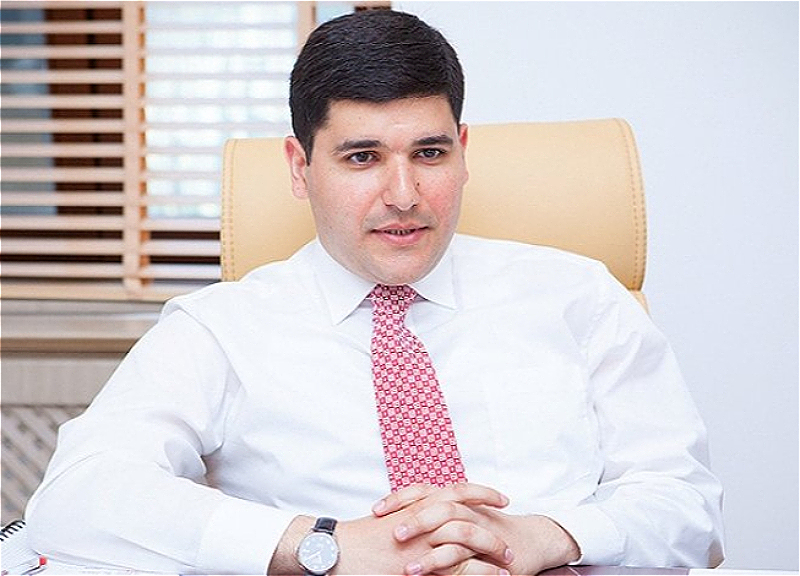
A year after the Washington summit, Donald Trump personally personally placed the call to Azerbaijani President Ilham Aliyev. Why the initiative of the American side is no less important than the content of the conversation, what is happening with TRIPP, and why the peace agenda is developing even without a signed treaty — in a commentary by the head of the Center for South Caucasus Studies, Farhad Mammadov, for 1news.az.
The telephone conversation between Ilham Aliyev and Donald Trump on August 8 lasted more than 40 minutes. As 1news.az learned from reliable sources, the call took place at the initiative of the American president and was timed to coincide with the first anniversary of the Washington peace summit.
It is precisely Washington's initiative, in Farhad Mammadov's opinion, that constitutes the main substance of this episode.
“A call from the president of the United States of America is an event, and a call from President Trump is a doubly significant event, since by virtue of his character President Trump prefers that people always turn to him,” the expert says. In his words, with this step Trump demonstrates how important the Armenian-Azerbaijani peace achieved as a result of the Washington summit is to him.
Mammadov recalls that over the past period the U.S. president has claimed credit for settling eight conflicts. “However, today it can be said that the most successful case, both visually and in terms of content, is precisely the Armenian-Azerbaijani one,” the political analyst believes. The very length of the conversation, in his assessment, is telling: 40 minutes allow one to say that a review of the work done was carried out and future plans were discussed.
Transit and the Section 907
According to a statement on the official website of the President of Azerbaijan, the conversation noted the export of Azerbaijani oil products to Armenia, the transit of cargo through the territory of Azerbaijan, and the beginning of trade ties between the two countries.
Mammadov arranges these positions in a sequence: the beginning of economic interaction was the opening of transit of cargo going to Armenia through Azerbaijani territory, and the second element was the export of Azerbaijani oil products. “Further, of course, we may see other positions — as needed and in demand, economic relations between Azerbaijan and Armenia will expand,” he says.
At the same time, in his opinion, the significance of this process goes beyond the bilateral agenda of Baku and Yerevan. The restrictions applied to Azerbaijan in the early 1990s in the form of the Section 907 were adopted under the influence of Armenian diaspora lobbying groups, and the main pretext for them was the “blockade of Armenia.”
“This is a one-sided, biased position, but in reality we have this picture,” Mammadov notes. “And the beginning of interaction between Azerbaijan and Armenia, the opening of transit, effectively nullify the grounds for these restrictions.”
The fact that the topic was discussed between the presidents, in his words, once again shows how important the repeal of the Section 907 and the actions of the Trump administration in this direction are for Azerbaijan.
Recall that the amendment has not been formally repealed: its effect is suspended annually by a decision of the White House. In June 2026, Ilham Aliyev reported that he had received from Donald Trump, as a commemorative gift, a memorandum on extending the suspension of the Section 907 — with a personal note from the American president.
TRIPP: formula and timelines
The statement from the President's press service emphasized the importance of TRIPP from the point of view of regional connectivity; it noted that work on transport infrastructure on the territory of Azerbaijan is at the completion stage, and expressed hope for an early start of work on the territory of Armenia.
Mammadov calls TRIPP one of the pivotal projects of the peace agenda and draws attention to the model embedded in it. “Within the framework of the project, a formula has been outlined for the participation of a third country in the peace agenda between Azerbaijan and Armenia. This formula presupposes the consent of the two capitals to the participation of a third country, and this participation is delineated within the framework of a specific project — with direct involvement that is financial, infrastructural, and organizational.”
According to his information, the United States and Armenia have practically completed the documentary part of the project. “Now it is at the final stage in Armenia, and by mid-September we may already have a fully registered and operating American-Armenian company,” the political analyst says.
Contrary to pessimistic forecasts, he notes, the U.S. not only has not lost interest in the project, but is doing a great deal of work — not only in Azerbaijan and Armenia, but also in Central Asia, on connecting an ever-greater number of states to TRIPP. The project itself, Mammadov emphasizes, is not limited to a railway and a highway: a power transmission line, an internet cable, infrastructure for data centers, and possibly in the future a gas pipeline are envisaged. “This is a big project that will link Central Asia and the South Caucasus with the western direction.”
The creation of an American investment fund with state participation of $201 million is interpreted by the expert as the formation of a platform in which private companies will be able to participate with U.S. guarantees.
“Of course, there is a great deal of talk around this project now, and to a certain extent there is also opposition — veiled and even open,” Mammadov admits. “But in fact we have a result: all the direct participants in the project continue to work toward its implementation on the ground.”
Two conditions for irreversibility
The peace agenda has been approved, and both sides demonstrate their commitment to it at the official level, the political analyst states. But in order to speak of the complete irreversibility of the process, in his assessment, two fundamental questions remain.
The first is the signing and ratification of the peace treaty, and here it must be remembered that the Azerbaijani side puts forward a demand for changing Armenia's Constitution. The Armenian government agrees with the topic of adopting a new Constitution, but there are certain internal obstacles to holding a referendum. “Whether this happens in six months, or in a year to a year and a half — time will tell,” Mammadov says.
And here he formulates the main observation of the year: “And nevertheless, today the peace agenda between Azerbaijan and Armenia is developing in the absence of a peace agreement. Accordingly, we get an objective picture in which the peace agenda is not a hostage to the absence of a peace agreement.”
The second question is TRIPP. Azerbaijan is completing the construction of railway and highway routes in the direction of Armenia; after the company is formalized and the regime of the route's operation with regard to Azerbaijani cargo and citizens is determined, work, according to the expert, should begin at the end of the year. “That is, in certain areas we see the obstacles to the irreversibility of the peace agenda. However, on the other hand, there is a certain pace in accordance with which steps are being implemented in order to overcome these obstacles.”
The best period in 34 years
Ilham Aliyev's assessment, in which he called the current stage of relations with the U.S. the best, has a basis, Mammadov believes, and he lists this basis point by point.
Contacts of leaders and government delegations: over the year, four government delegations of Azerbaijan visited the U.S., and Azerbaijan received a large number of delegations from official structures and the largest private companies. A Charter on Strategic Partnership has been signed, presupposing active contacts between the two countries. Major projects are being implemented — not only on a bilateral basis, but also with the involvement of the states of Central Asia.
“Along with this, there is a coincidence of interests with regard to such regions as Central Asia, the South Caucasus and, strange as it may seem, the Middle East,” the expert notes. Azerbaijan acts as a platform for negotiations between Israel and Turkey, and Israeli-Turkish normalization fully coincides with the interests of the U.S. Mammadov also includes here Azerbaijan's participation in the Board of Peace for Gaza.
Separately — the personal relations of the two presidents. “Even several months before the elections in the U.S., the President of Azerbaijan noted that he was favorably impressed by Trump's election program and his vision on a very wide range of issues,” the political analyst recalls. After the election, in his words, this attention became mutual, and it is no coincidence that it is precisely the President of Azerbaijan who has been invited to the G20 summit, which will be held in the U.S. in December of this year.